
10 Best Approach Shoes for Climbers (2026)
Approach shoes get you to the crag over trail, scree, and easy rock — then let you scramble the last tricky bit without swapping into climbing shoes. We compared 10 of the best, from the iconic Scarpa Mojito to the technical Salewa Wildfire, on grip, edging, weight, and value.
Key Takeaways
- Best overall: SCARPA Mojito — grippy, comfortable, and great off the mountain too.
- Best scrambler: adidas Terrex Guidetennie, with sticky Stealth rubber for real edging.
- Fit snug for technical terrain, roomier for long flat approaches.
- Sticky rubber beats tread when the approach turns to rock.
Best Approach Shoes at a Glance
| # | Product | Best For | Standout | Score | |
|---|---|---|---|---|---|
| 1 | SCARPA Mojito Approach Shoe | Overall | Do-everything icon | 9.2 | Check Price → |
| 2 | adidas Terrex Guidetennie Approach Shoe | for Edging & Scrambling | Stealth rubber edging | 9.1 | Check Price → |
| 3 | Salewa Wildfire NXT Approach Shoe | for Technical Terrain | Technical alpine fit | 9.0 | Check Price → |
| 4 | Arc’teryx Konseal Approach Shoe | Lightweight | Light & precise | 8.9 | Check Price → |
| 5 | Arc’teryx Konseal GTX Approach Shoe | Waterproof | Gore-Tex | 8.8 | Check Price → |
| 6 | GARMONT Dragontail LT Evo Approach Shoe | Durable | Tough Vibram | 8.7 | Check Price → |
| 7 | ASOLO Eldo LTH GV Approach Shoe | Leather | Leather + GTX | 8.6 | Check Price → |
| 8 | EVOLV Rebel Approach Shoe | Womens | Climbing fit | 8.5 | Check Price → |
| 9 | KEEN Jasper Approach Shoe | Everyday | Comfort crossover | 8.4 | Check Price → |
| 10 | Merrell Speed Strike Approach Shoe | Budget | Budget value | 8.2 | Check Price → |
The 10 Best Approach Shoes, Reviewed

SCARPA Mojito Approach Shoe
The Mojito is the approach shoe that crossed over into an everyday icon, and it earns it: a grippy Vibram sole, a comfortable last that suits all-day wear, and enough climbing-zone rubber at the toe to scramble easy terrain. The do-everything pick for most climbers.
Pros
- Grippy Vibram sole
- All-day comfort
- Great for travel too
Cons
- Not for hard technical scrambling
- Suede needs care
Skip it if: you need an aggressive edging shoe for 4th-class terrain.
Check Price on Amazon →
adidas Terrex Guidetennie Approach Shoe
The descendant of the legendary Five Ten Guide Tennie, the Guidetennie pairs sticky Stealth rubber with a flat climbing zone and a stiff edge, so you can smear and edge on technical approaches like a climbing shoe. The choice when the walk-in is nearly a climb.
Pros
- Sticky Stealth rubber
- Precise edging
- Climbs easy terrain well
Cons
- Stiffer, less casual
- Runs narrow
Skip it if: you want a soft, casual everyday shoe.
Check Price on Amazon →
Salewa Wildfire NXT Approach Shoe
Salewa builds the Wildfire for alpine approaches: a precise fit, a climbing lacing zone to the toe, and grippy Michelin/Pomoca rubber that bites on rock and scree. Stable and protective, it is the shoe for rugged, technical walk-ins and via ferrata.
Pros
- Precise technical fit
- Grippy, stable sole
- Toe lacing for edging
Cons
- Snug alpine fit
- Pricey
Skip it if: you want a relaxed shoe for flat trails.
Check Price on Amazon →
Arc’teryx Konseal Approach Shoe
The Konseal is light, precise, and climbs well above its weight, with sticky rubber and a snug, sock-like fit that disappears on long approaches. For alpine starts and fast missions where every gram counts, it is a standout.
Pros
- Very light
- Precise, snug fit
- Climbs well
Cons
- Snug sizing
- Premium price
Skip it if: you want a roomy, cushioned hiker.
Check Price on Amazon →
Arc’teryx Konseal GTX Approach Shoe
The GTX version of the Konseal adds a Gore-Tex membrane to keep your feet dry through wet grass, stream crossings, and snowmelt, while keeping the precise, light feel of the standard shoe. The pick for damp, cold approaches.
Pros
- Gore-Tex waterproof
- Light and precise
- Warmer for shoulder seasons
Cons
- Runs warm in summer
- Premium price
Skip it if: you climb mostly in dry, hot conditions.
Check Price on Amazon →
GARMONT Dragontail LT Evo Approach Shoe
Garmont has made the Dragontail for years because it works: a supportive, durable build with a grippy Vibram sole that handles rough approaches and scree without falling apart. A dependable, hard-wearing choice for frequent mountain days.
Pros
- Very durable build
- Supportive and stable
- Grippy Vibram
Cons
- Heavier than race shoes
- Less precise for climbing
Skip it if: you want the lightest possible shoe.
Check Price on Amazon →
ASOLO Eldo LTH GV Approach Shoe
Asolo wraps the Eldo in durable leather with a Gore-Tex lining, giving you a supportive, weatherproof approach shoe that breaks in to a comfortable, long-lasting fit. A solid pick if you prefer leather over synthetic uppers.
Pros
- Durable leather upper
- Gore-Tex waterproof
- Supportive
Cons
- Heavier
- Longer break-in
Skip it if: you want a light synthetic shoe.
Check Price on Amazon →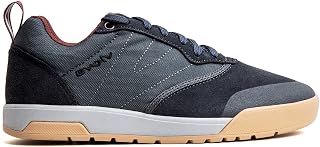
EVOLV Rebel Approach Shoe (Women\’s)
Evolv, a climbing-shoe brand, builds the Rebel with a women-specific fit and plenty of sticky climbing rubber, so it smears and edges better than most approach shoes on technical terrain. A great choice for women who scramble hard on the way to the crag.
Pros
- Women’s-specific fit
- Sticky climbing rubber
- Edges well
Cons
- Less cushioned for long trails
- Limited sizing
Skip it if: you want a plush shoe for long flat approaches.
Check Price on Amazon →
KEEN Jasper Approach Shoe
The KEEN Jasper is the comfortable crossover: a cushioned, casual shoe with enough grip and a protective toe for easy approaches and hanging at the crag. Not a technical climber, but hugely popular for all-day comfort and value.
Pros
- Very comfortable
- Protective toe
- Great value
Cons
- Not for technical scrambling
- Softer sole
Skip it if: you need precise edging on steep approaches.
Check Price on Amazon →
Merrell Speed Strike Approach Shoe
Merrell delivers a light, breathable, grippy shoe at a budget price that handles trail approaches and easy scrambles well. Not a dedicated climbing-brand approach shoe, but excellent value for climbers who want comfortable feet without spending much.
Pros
- Affordable
- Light and breathable
- Grippy on trail
Cons
- Less climbing-specific rubber
- Not for hard edging
Skip it if: you want sticky rubber for technical terrain.
Check Price on Amazon →What Makes a Good Approach Shoe
An approach shoe bridges a hiking shoe and a climbing shoe. The key features: sticky rubber (often Vibram or Stealth) that grips rock, a climbing zone of flat rubber at the toe for smearing and edging, a precise fit that lets you stand on small holds, and enough protection and support for the walk in. The more technical your approaches, the more you want climbing-shoe traits; the flatter your trails, the more you want hiking comfort.
How Should Approach Shoes Fit
Fit snugger than a hiking shoe but not painfully tight: you want a precise toe for standing on edges, with just enough room that your toes are not jammed on long descents. Technical approach shoes (Salewa Wildfire, Guidetennie) fit close like a performance shoe; comfort crossovers (KEEN Jasper) fit roomier. Try them with your hiking socks and walk a descent in the store if you can.
How to Choose Approach Shoes
Match the shoe to your approaches. Casual trail walk-ins and everyday wear? A comfortable crossover like the Mojito or Jasper. Technical, exposed, or via-ferrata approaches? A precise shoe with a toe lacing zone like the Wildfire or Guidetennie. Wet or shoulder-season conditions? Choose a Gore-Tex version. Fast-and-light alpine? Prioritize the lightest precise shoe like the Konseal.
Approach Shoes vs Climbing Shoes vs Hiking Boots
Climbing shoes are for the climb itself — too aggressive and uncomfortable to walk in. Hiking boots are great for long trails but clumsy on rock. Approach shoes sit in between: comfortable enough to hike, grippy and precise enough to scramble easy climbing. They are not a replacement for climbing shoes on real routes, nor for boots on big alpine hikes — they shine on the terrain in between.
Frequently Asked Questions
What is the difference between approach shoes and hiking shoes?
Approach shoes use stickier climbing rubber and a flat toe zone for scrambling and edging on rock, with a more precise fit. Hiking shoes prioritize cushioning and tread for trails but are clumsier on technical rock.
Can I climb in approach shoes?
You can climb easy, low-grade terrain and scramble in good approach shoes — that is what they are for. For anything steep or technical you still want proper climbing shoes; approach shoes are not a substitute on real routes.
How should approach shoes fit?
Snugger and more precise than a hiking shoe for standing on edges, but not so tight your toes jam on descents. Technical models fit close; comfort crossovers fit roomier. Try them with your usual socks.
Do I need Gore-Tex approach shoes?
Only if you regularly approach in wet grass, snowmelt, or shoulder-season conditions. Gore-Tex keeps feet dry but runs warmer, so in hot, dry climates a non-waterproof shoe breathes better.
Are approach shoes good for everyday wear?
Many, like the Scarpa Mojito and KEEN Jasper, are comfortable and stylish enough for daily use and travel. More technical models are stiffer and less casual but still wearable off the mountain.
The Bottom Line
For most climbers, the SCARPA Mojito is the best approach shoe — grippy, comfortable, and equally at home on the trail or in town. If your approaches turn into real scrambling, the adidas Terrex Guidetennie and Salewa Wildfire edge like climbing shoes, while the Arc\’teryx Konseal is the pick for fast-and-light missions. Match the shoe to your terrain, fit it snug for precision, and let sticky rubber do the work when the walk turns to rock.