How to Clean Climbing Shoes and Remove Odor: A Simple Guide
You can keep your climbing shoes fresh and extend their lifespan by washing them with mild soap and room-temperature water to remove odor.
Key Takeaways
- Why climbing shoes need cleaning and deodorizing
- Simple steps for a deep clean
- Choosing the right cleaning supplies
- A quick test for your shoes
- The honest limits of cleaning
- When to retire your shoes
- Care and storage habits
On this page
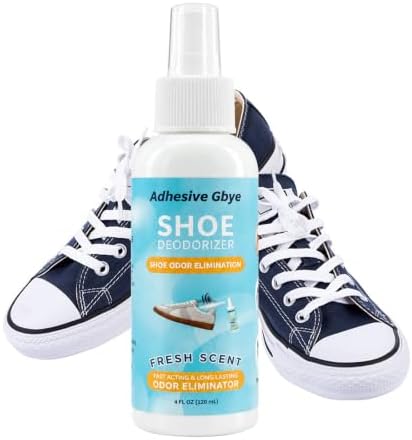
Recommended Products for Shoe Care





Why climbing shoes need cleaning and deodorizing
Climbing shoes are designed to fit tight against your skin, which creates a warm, moist environment inside the leather or synthetic upper. Bacteria thrive in this sweat-filled space, and as they break down the organic matter from your skin, they produce the unpleasant odor you notice. If you let this moisture sit after every session, the bacteria population grows quickly.
The rubber on your soles also loses its grip when covered in dirt, chalk, and skin oils. This buildup creates a slick layer that makes you slip on small holds. Keeping the soles clean isn’t just about hygiene; it’s a critical part of maintaining your performance on the wall.
Simple steps for a deep clean
You should wash your shoes by hand rather than using a machine, as heat and agitation break down the structural integrity of the shoe. Follow these steps to refresh your gear without causing damage.
- Use a soft-bristled brush to remove dried mud and chalk from the rubber soles and the outer upper.
- Fill a basin with cool or lukewarm water and add a tiny amount of mild, pH-neutral soap.
- Dip a cloth or soft brush into the soapy water and gently scrub the inside lining to remove sweat and dead skin.
- Rinse the shoes thoroughly with cool water to ensure no soap residue remains, as this can affect the grip of the rubber.
- Stuff the shoes with dry paper towels to help them hold their shape while they air dry.
- Place them in a cool, shaded area with good airflow, keeping them away from direct sunlight or heaters.
Choosing the right cleaning supplies
The materials your shoes are made of will dictate how you treat them. Synthetic materials are generally more resilient, while natural leather can stretch or stiffen if you soak it for too long. If your shoes are made of unlined leather, use less water to prevent the material from hardening as it dries.
| Material Type | Cleaning Frequency | Drying Method |
|---|---|---|
| Unlined Leather | Every 3-4 months | Slow air dry only |
| Synthetic | Every 1-2 months | Air dry with fan |
| Lined Leather | Every 2-3 months | Paper towel stuffing |
If you have a very smelly pair, you might be tempted to use strong disinfectants. Avoid these, as they can degrade the specialized adhesives holding your soles to the rand. If your shoes aren’t particularly dirty, a simple wipe-down of the soles with a damp cloth after each climb is enough to keep them performing well.
A quick test for your shoes
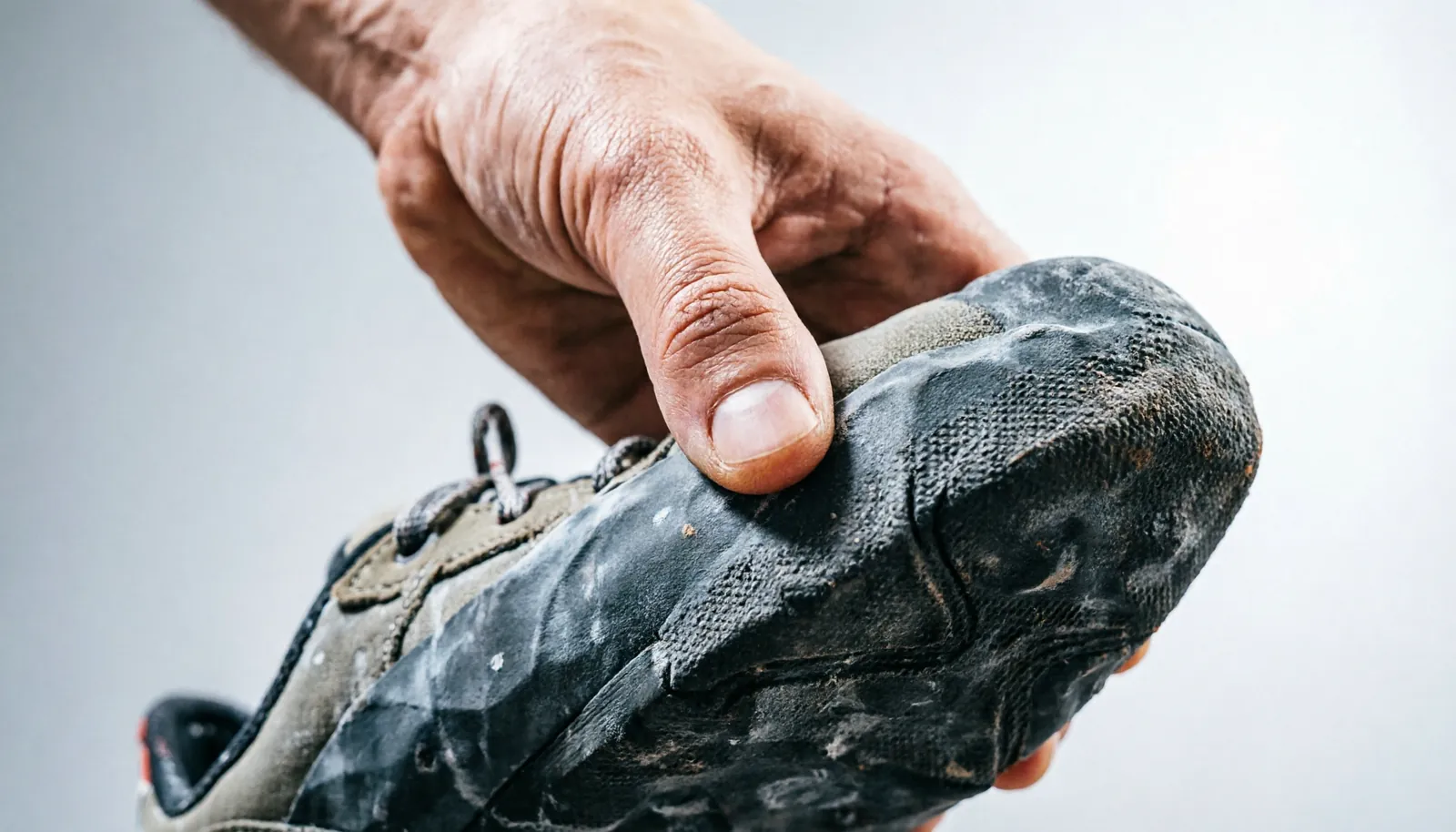
You can check if your shoes need a deep clean with this simple test.
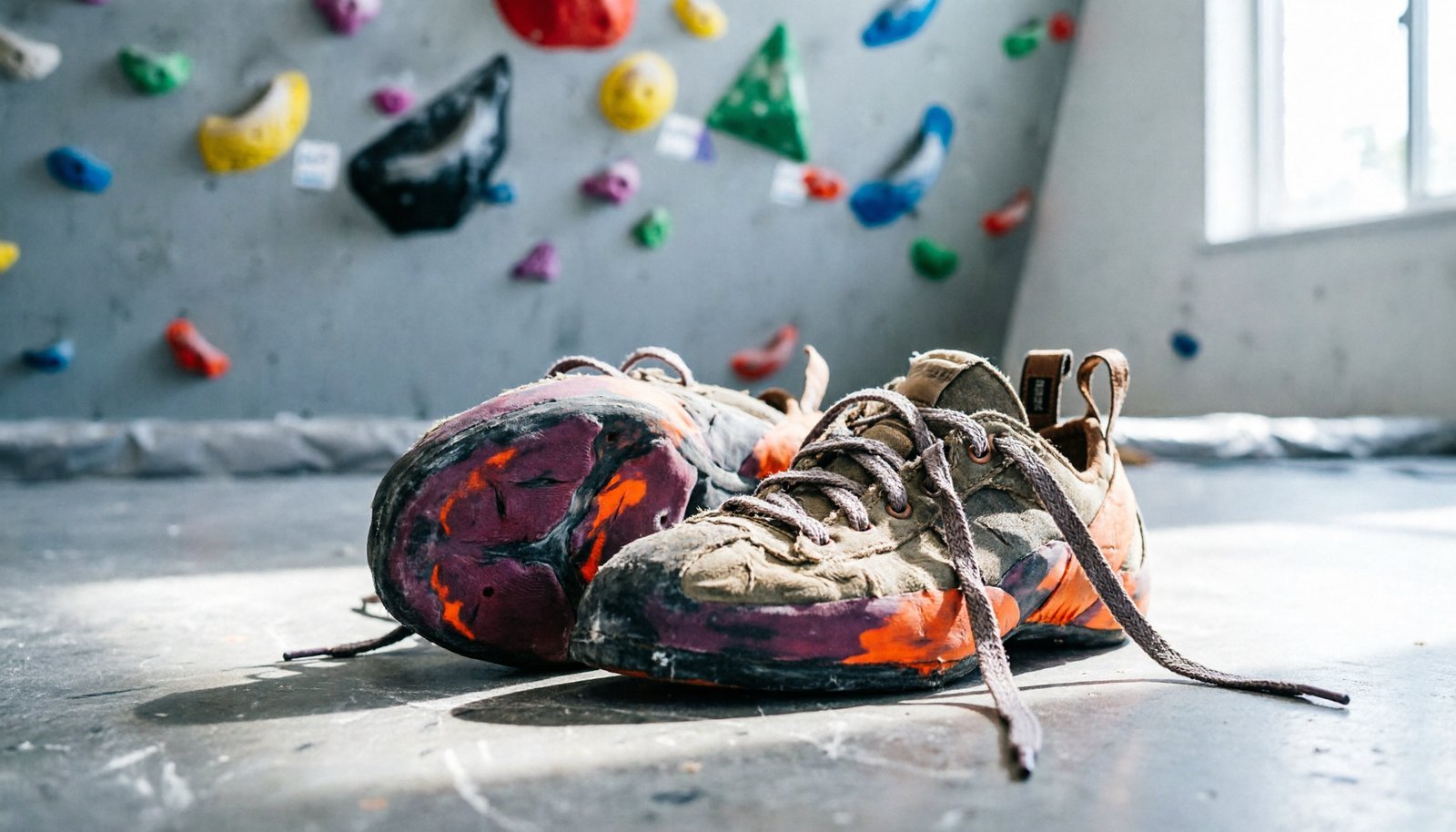
Press your thumb firmly against the rubber sole and slide it across. If the rubber feels slick or leaves an oily residue on your skin, it’s time for a cleaning. This slickness indicates a breakdown of the rubber compound caused by trapped grime and floor oils.
Smell the inside of the heel area. If it has a sharp, sour scent, the bacterial buildup is significant enough to require a full wash. A neutral or faint scent means you only need a surface wipe.
Avoid the common mistake of using harsh bleach, which degrades the structural integrity of foam midsoles. If you detect a sour odor, use a specialized enzymatic cleaner instead. It breaks down the proteins that cause the smell without damaging the fabric.
The honest limits of cleaning
Cleaning can remove surface bacteria and improve traction, but it can’t fix structural degradation. If the rubber has worn down to the rand or the shape of the shoe has permanently deformed, no amount of scrubbing will restore its original precision.
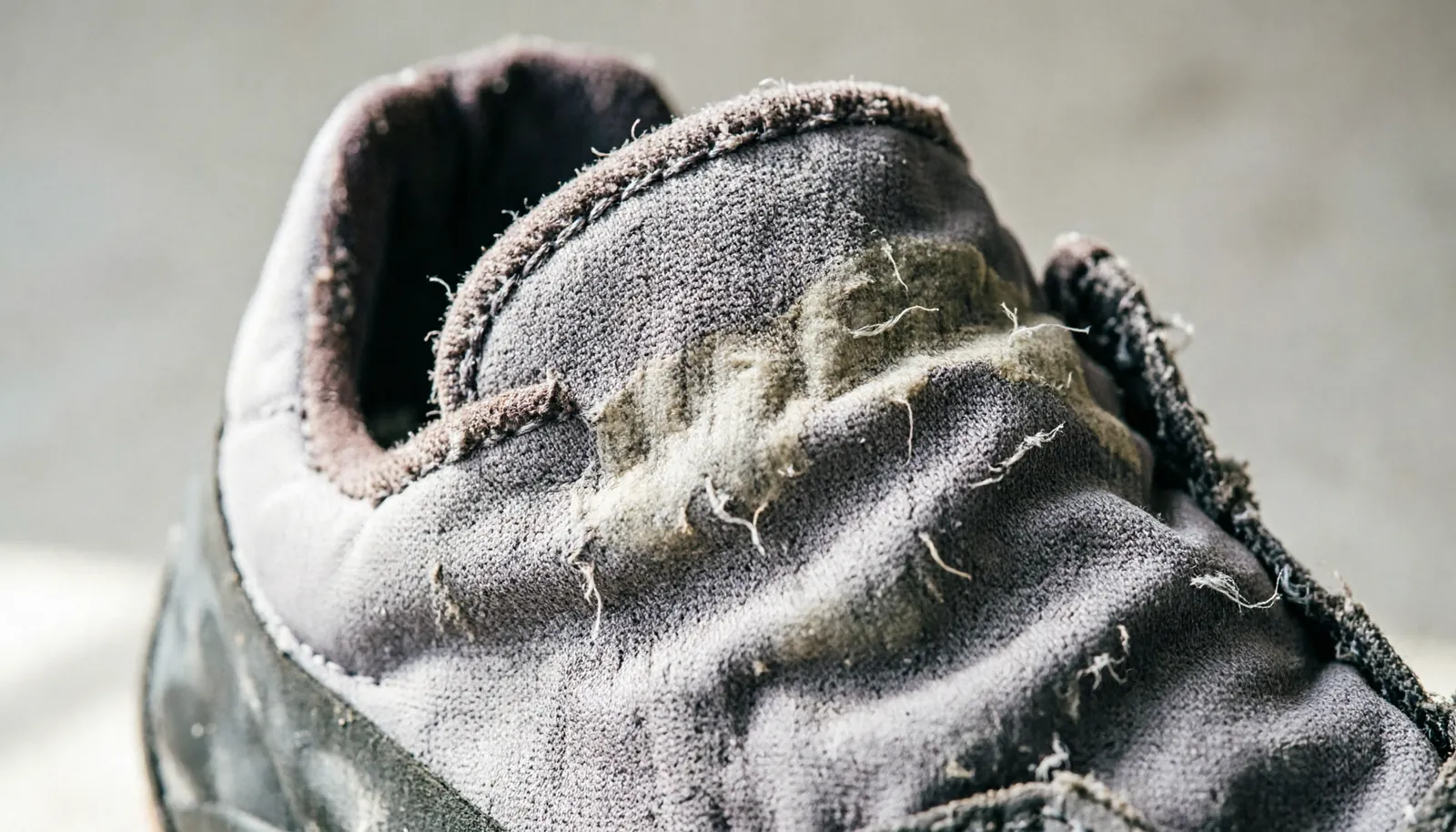
Marketing claims about “odor-eliminating” linings are often true for the first few weeks, but these treatments wear off as the material ages. If you notice the fabric interior feels slick or frayed, the chemical bonding agent has likely failed. At this stage, scrubbing only accelerates the breakdown of the remaining synthetic fibers.
Use this simple test: if the rubber feels glassy rather than tacky after a thorough cleaning, the material has crystallized. Replace the shoes immediately to prevent injury.
When to retire your shoes
You should retire your shoes when the rubber is worn through the toe box or when the heel cup no longer maintains a snug fit.
A reliable test is the “press test.” Push your thumb into the midsole foam. If the material feels compressed, hard, or fails to spring back, the cushioning is dead.
If the sole is peeling away from the upper at the edges, you can often have them resoled by a professional. However, if the inner material is fraying or the stitching has failed, the shoe has reached the end of its life. Ignoring these structural failures leads to blisters and uneven gait patterns that cause long-term injury.
Care and storage habits
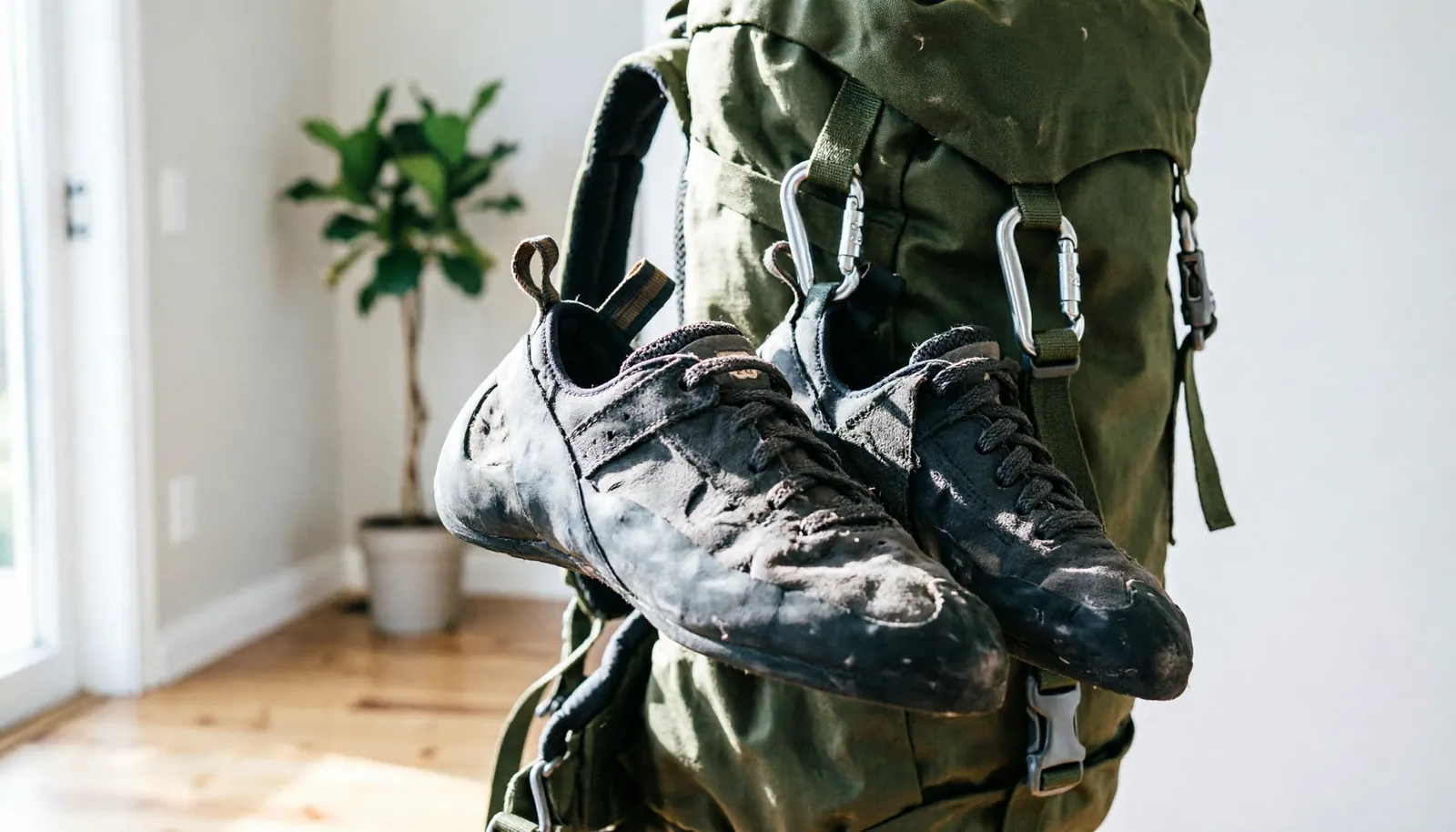
Never leave your climbing shoes inside a closed gym bag after a session. The trapped humidity is the primary cause of both odors and the breakdown of your shoes’ materials. Always clip them to the outside of your bag or store them in a mesh bag where air can circulate freely. If you climb multiple days in a row, consider using a boot dryer on a cool setting or simply rotating between two pairs.
Frequently asked questions
Can I put my climbing shoes in the washing machine?
No, never use a washing machine. The heat and the mechanical tumbling can ruin the glue and permanently warp the shape of the shoes.
How do I stop the smell from coming back?
The best way is to keep your feet dry and ensure your shoes have enough time to air out between uses. You can also use a small bag of cedar chips or activated charcoal inside the shoes when they’re stored.
Does cleaning my shoes make the rubber stickier?
Yes, cleaning removes the layer of chalk and dust that blocks the rubber from making contact with the rock. It restores the friction that the manufacturer intended.
Will soap damage the leather?
Standard mild soap is generally safe, but avoid harsh detergents or bleach. These can strip the natural oils from the leather, causing it to become brittle and crack over time.
How long should they take to dry?
This depends on the humidity in your home, but it usually takes 12 to 24 hours. Never speed up the process with a hair dryer, as high heat will melt the glue.
Should I use a shoe spray?
Most sprays only cover the smell rather than removing the cause. It’s better to focus on cleaning the inside of the shoe to remove the bacteria.
How do I know if they’re too far gone to clean?
If the smell persists even after a thorough wash and dry, it’s likely that the bacteria have penetrated deep into the foam or fabric. At this point, the smell is likely permanent.
Is it safe to use a brush on the upper?
Use a soft-bristled brush for the upper and a stiffer brush for the rubber soles. A stiff brush on a delicate fabric upper can cause pilling or fraying.
Conclusion
The bottom line is that regular, gentle maintenance is the most effective way to keep your climbing shoes performing well and smelling decent. Focus on removing moisture immediately after climbing and keep your cleaning process simple to avoid damaging the materials. By treating your shoes with care, you get more time on the wall and a better experience every time you lace up.
Related guides
- How to Wash a Climbing Rope Safely to Extend Its Lifespan
- Dynamic vs Static Rope: How to Choose the Right Climbing Line