
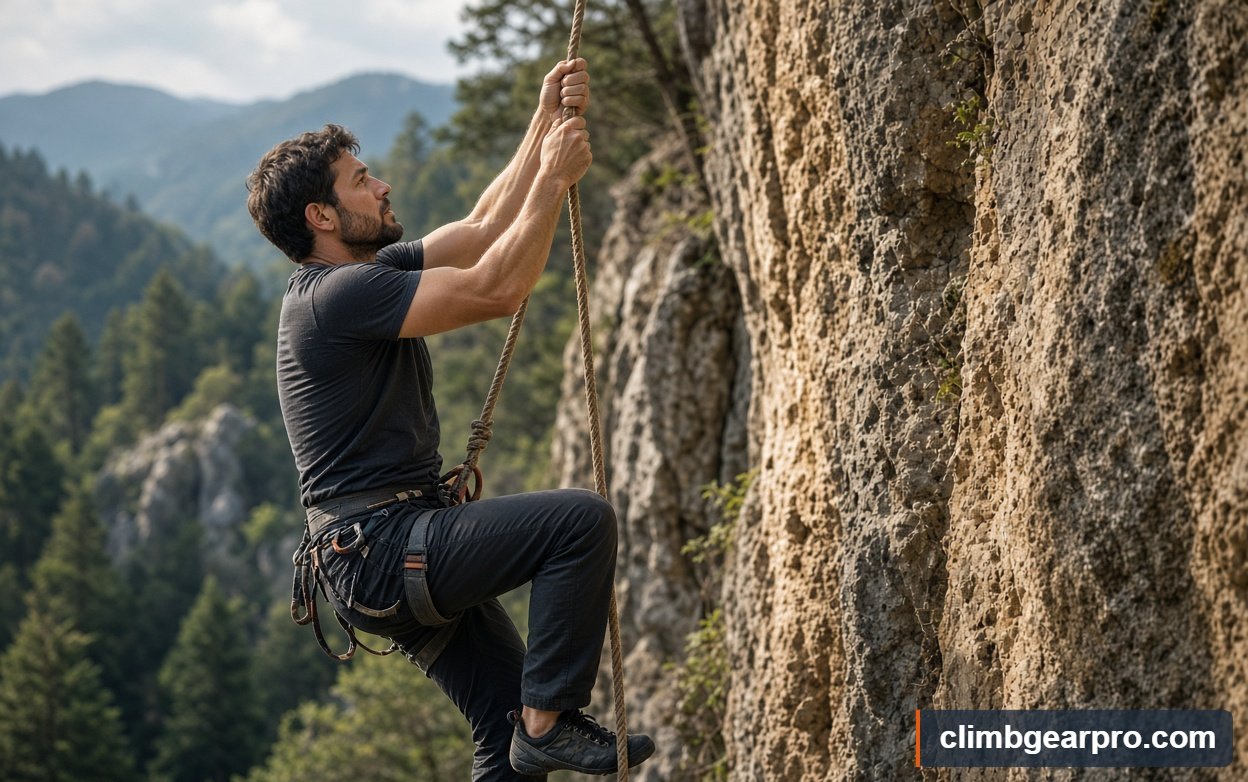
How to Climb a Rope: Step-by-Step Guide for Beginners
Climbing a rope seems simple at first glance. But mastering this skill takes more than just strength—it’s about technique, practice, and safety. Rope climbing is used in fitness, obstacle courses, military training, and even playgrounds. Learning how to climb a rope can improve your grip, build core muscles, and boost confidence.
If you’re ready to climb, this guide will show you step-by-step instructions, safety tips, different techniques, and mistakes to avoid. Whether you’re a beginner or want to refine your skills, you’ll find actionable advice and examples to help you climb a rope safely and efficiently.
Key Takeaways
- Why Learn To Climb A Rope?
- Choosing The Right Rope
- Preparing Your Body
- Rope Climbing Techniques
- Step-by-step Guide To Climbing A Rope
- Safety Tips For Rope Climbing
On this page
- Why Learn To Climb A Rope?
- Choosing The Right Rope
- Preparing Your Body
- Rope Climbing Techniques
- Step-by-step Guide To Climbing A Rope
- Safety Tips For Rope Climbing
- Common Mistakes And How To Avoid Them
- Training Progression For Beginners
- Benefits Of Rope Climbing
- Rope Climbing For Kids
- Rope Climbing In Fitness And Sports
- Practical Tips For Better Rope Climbing
- Advanced Rope Climbing Skills
- How To Prevent Rope Burns And Blisters
- Maintenance And Care For Climbing Ropes
- Environmental Considerations
- Rope Climbing For Different Fitness Levels
- Frequently Asked Questions
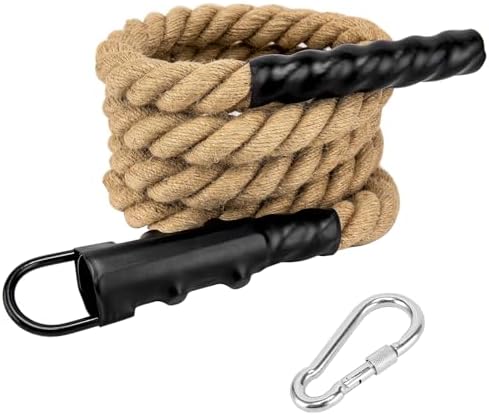
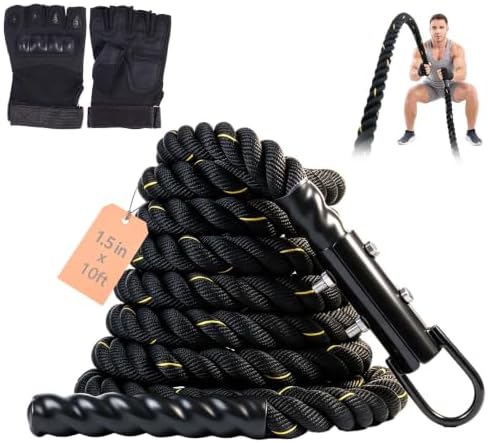
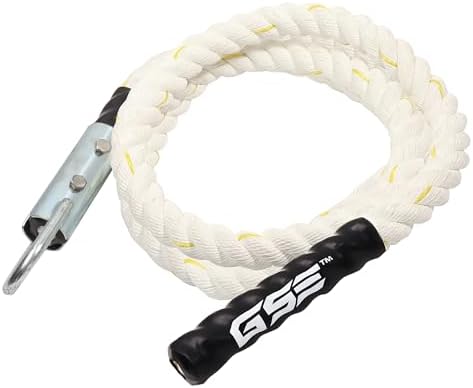
Recommended Products for Climbing Ropes




Why Learn To Climb A Rope?
Climbing a rope is not only useful for fitness. Many sports and activities require this skill. Gymnastics, CrossFit, ninja courses, and military drills use rope climbing to test strength and coordination. Rope climbing also improves grip strength, upper body power, and core stability. It’s a full-body workout that challenges your muscles and mental focus.
Some statistics show how effective rope climbing is for fitness. A single rope climb can burn between 10–15 calories, depending on your weight and speed. According to fitness experts, regular rope climbing can increase hand strength by up to 20% in just four weeks. It also improves muscle endurance more than many machine exercises.
Choosing The Right Rope
| Product | Type | Key Specs | Best For | Shop Now |
|---|---|---|---|---|
| MaxxHaul Diamond Braided Rope | Utility Rope | 3/8″ x 50 ft, 500 lb load | Practice, knots, general use | Buy → |
| GINEE Static Rope + Carabiner | Static Safety Rope | 10mm with descender | Rappelling & tree climbing | Buy → |
| Yes4All Gym Climbing Rope | Fitness Rope | 1.5″ diameter, 10-20 ft | Strength training & technique | Buy → |
| Lopevex 1/2″ Static Rope | Heavy-Duty Static Rope | 1/2″ x 150 ft, 9000 lb strength | Serious training & rigging | Buy → |
| AOLEBA 10.5mm Static Rope | Static Kernmantle Rope | 10.5mm, various lengths | Outdoor climbing & rappelling | Buy → |
| AOLEBA Climbing Rope Kit | Static Rope Set | 10.5mm with accessories | Beginner multi-purpose | Buy → |
| Black Diamond Dynamic Rope | Dynamic Rock Rope | Premium dynamic rope | Advanced lead climbing | Buy → |
Picking the right rope is the first step. The rope you use affects your grip, safety, and comfort.
Rope Types
There are several types of ropes for climbing:
- Manila Rope: Traditional, made from natural fibers. Offers good grip but can be rough on hands.
- Polypropylene Rope: Synthetic, smoother, and often used for indoor gyms.
- Nylon Rope: Strong, durable, but slippery. Used in professional settings.
Rope Thickness
The thickness matters for grip. Most ropes are between 1.5 inches and 2 inches thick. Beginners usually find 1.5-inch ropes easier to grip.
Rope Length
Rope length depends on your space. Standard ropes are 15 feet to 20 feet long. For home use, choose a rope that fits your ceiling height.
Rope Setup
Attach the rope securely. Use strong beams or anchors rated for climbing. Check that the rope is stable and not frayed. If you’re unsure, ask a gym staff or professional.
| Rope Type | Grip Comfort | Durability | Best Use |
|---|---|---|---|
| Manila | Good | Medium | Traditional gyms, outdoors |
| Polypropylene | Excellent | High | Indoor gyms |
| Nylon | Fair | Very High | Professional courses |
Preparing Your Body
Rope climbing is demanding. Preparing your body helps avoid injuries and boosts performance.
Warm Up
Warm up for at least 10 minutes. Focus on:
- Arm circles
- Wrist rotations
- Jumping jacks
- Light jogging
Warming up increases blood flow and prepares your muscles.
Strength Training
You don’t need to be extremely strong, but basic strength makes climbing easier. Some useful exercises:
- Pull-ups: Strengthen your arms and back.
- Planks: Improve core stability.
- Dead hangs: Train grip endurance.
- Farmer’s walks: Build forearm strength.
Aim for two sessions per week before you start rope climbing.
Stretching
Stretch your forearms, shoulders, and legs after training. Flexibility helps you move smoothly and prevents muscle strains.
Also read: How to Start Rock Climbing Outdoors: Essential Tips for Beginners
Rope Climbing Techniques
There are several ways to climb a rope. Each technique suits different needs and skill levels. Let’s break down the most popular ones.
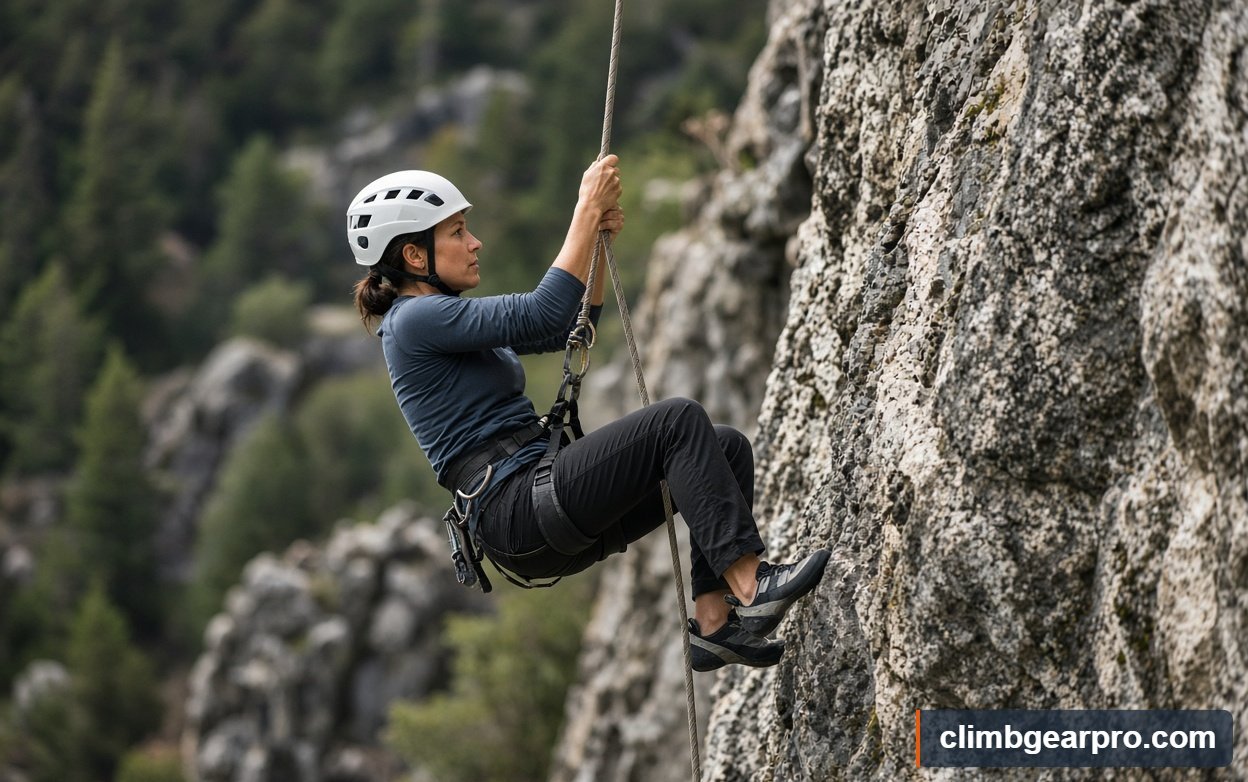
1. The J-hook Technique
This is the most common method for beginners and athletes.
How it works:
- Stand facing the rope.
- Grab the rope with both hands above your head.
- Bring your right knee up.
- Wrap the rope under your right foot and over your left.
- Pinch the rope between your feet.
- Stand up by pressing your feet together and pulling with your arms.
- Slide your hands up the rope and repeat.
Benefits:
- Saves energy
- Reduces arm fatigue
- Provides stability
Common Mistake: Not pinching the rope hard enough between the feet, causing slipping.
2. The S-wrap Technique
This method uses your legs to wrap around the rope.
How it works:
- Grab the rope overhead.
- Bring the rope around your right leg, wrapping it from the outside in.
- Cross the rope over your foot and step on it with your left foot.
- Use your legs to push while your hands pull.
Benefits:
- Good for longer climbs
- More secure grip
Drawback: Slower than the J-Hook, but safer for beginners.
3. No-leg Technique
This is advanced and used in competitions.
How it works:
- Grab the rope overhead.
- Use only your arms to pull yourself up.
- Keep your legs straight or bent, but do not use them for grip.
Benefits:
- Builds maximum upper body strength
- Fast for short climbs
Drawback: High risk of fatigue and injury.
| Technique | Energy Use | Difficulty | Best For |
|---|---|---|---|
| J-Hook | Low | Easy | Beginners, fitness |
| S-Wrap | Medium | Moderate | Long climbs |
| No-Leg | High | Hard | Competitions |
Step-by-step Guide To Climbing A Rope
Here is a detailed process to climb a rope safely and effectively.
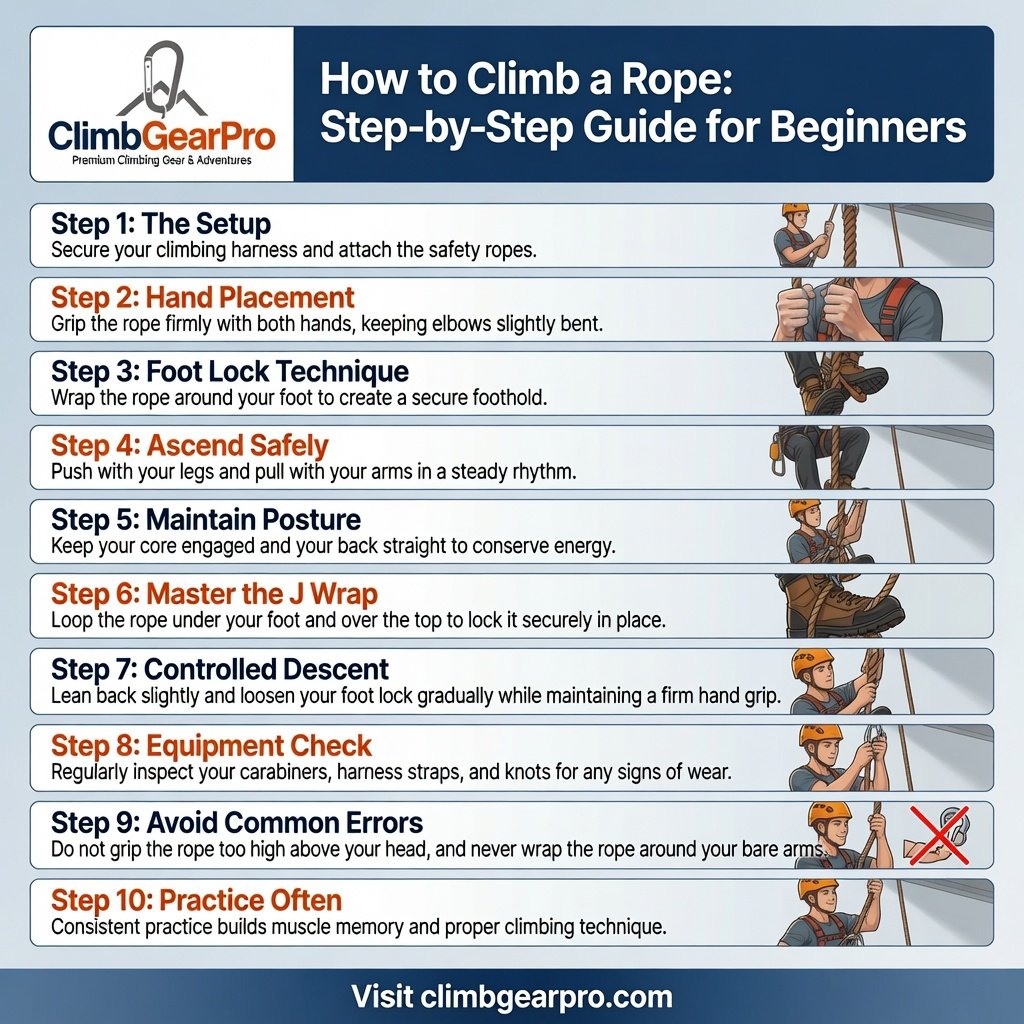
Step 1: Gripping The Rope
- Use an overhand grip (thumbs pointing toward you).
- Keep your hands shoulder-width apart.
Step 2: Setting Your Feet
- For the J-Hook, lift your knee and wrap the rope under and over your feet.
- Pinch the rope tightly between your shoes.
Step 3: Standing Up
- Push down with your feet.
- Pull with your arms.
- Move your body upright.
Step 4: Moving Your Hands
- Slide your hands up, one at a time.
- Keep your hands close together for stability.
Step 5: Repeat The Process
- Re-set your feet higher.
- Push and pull again.
- Move hands up.
Step 6: Reaching The Top
- Slow down as you near the end.
- Make sure you have a secure grip before touching the ceiling or anchor.
Step 7: Descending Safely
- Lower yourself slowly.
- Keep the rope pinched between your feet.
- Slide your hands down carefully.
Important tip: Never jump off the rope. Always descend slowly to avoid injury.
Safety Tips For Rope Climbing
Safety must be your priority. Rope climbing comes with risks, but careful steps can prevent most accidents.
Check Your Equipment
- Inspect the rope for frays or damage before each use.
- Make sure the rope is anchored securely.
- Use mats or padding under the rope.
Use Proper Footwear
- Wear shoes with good grip and closed toes.
- Avoid sandals or running shoes with slippery soles.
Start Slow
- Practice at lower heights first.
- Build confidence before climbing higher.
Don’t Overreach
- Keep your movements controlled.
- Avoid sudden jerks or jumps.
Hydrate And Rest
- Drink water before and after climbing.
- Rest between climbs to avoid muscle fatigue.
Spotters And Supervision
- Have a friend or coach watch you, especially if you’re new.
- In gyms, staff can help with technique and safety.
Common Mistakes And How To Avoid Them
Many beginners make mistakes that lead to frustration or injury. Here are some to watch for:
- Using only arms: This tires you quickly. Always use your legs for support.
- Poor foot technique: Not wrapping the rope well can cause slipping. Practice the J-Hook or S-Wrap before climbing high.
- Rushing: Fast movements can lead to falls. Go slow, especially on descent.
- Ignoring pain: Rope burns and blisters are common. Stop if you feel discomfort.
- Skipping warm-up: Cold muscles increase injury risk.
- Not checking rope: Using a damaged rope is dangerous.
- Improper shoes: Shoes without grip make climbing harder.
Non-obvious insight: Many climbers forget to train their grip separately. Doing grip exercises off the rope can make climbing much easier.
Training Progression For Beginners
If you’re starting from zero, use a progression plan to build skill and strength.
Week 1–2: Ground Practice
- Practice wrapping the rope around your feet while standing on the ground.
- Do grip exercises, such as holding a towel or thick bar.
Week 3–4: Short Climbs
- Climb halfway up the rope, using the J-Hook or S-Wrap.
- Focus on slow, controlled movements.
Week 5–6: Full Climbs
- Climb to the top and descend slowly.
- Increase speed only when you feel confident.
Beyond Week 6: Advanced Skills
- Try no-leg climbs or speed climbs.
- Add weight vests for more challenge.
Benefits Of Rope Climbing
Rope climbing is more than a cool skill. It has real health and fitness benefits.
Physical Benefits
- Grip strength: Rope climbing builds hand and forearm muscles.
- Upper body: Arms, shoulders, and back become stronger.
- Core: Your abs and lower back work to stabilize your body.
- Cardio: Climbing increases heart rate and burns calories.
Mental Benefits
- Confidence: Achieving a full climb boosts self-esteem.
- Focus: Rope climbing requires concentration and planning.
- Discipline: Regular practice builds dedication.
Sports Performance
Athletes use rope climbing to improve performance in gymnastics, wrestling, and obstacle racing. The skill translates to better balance and agility.
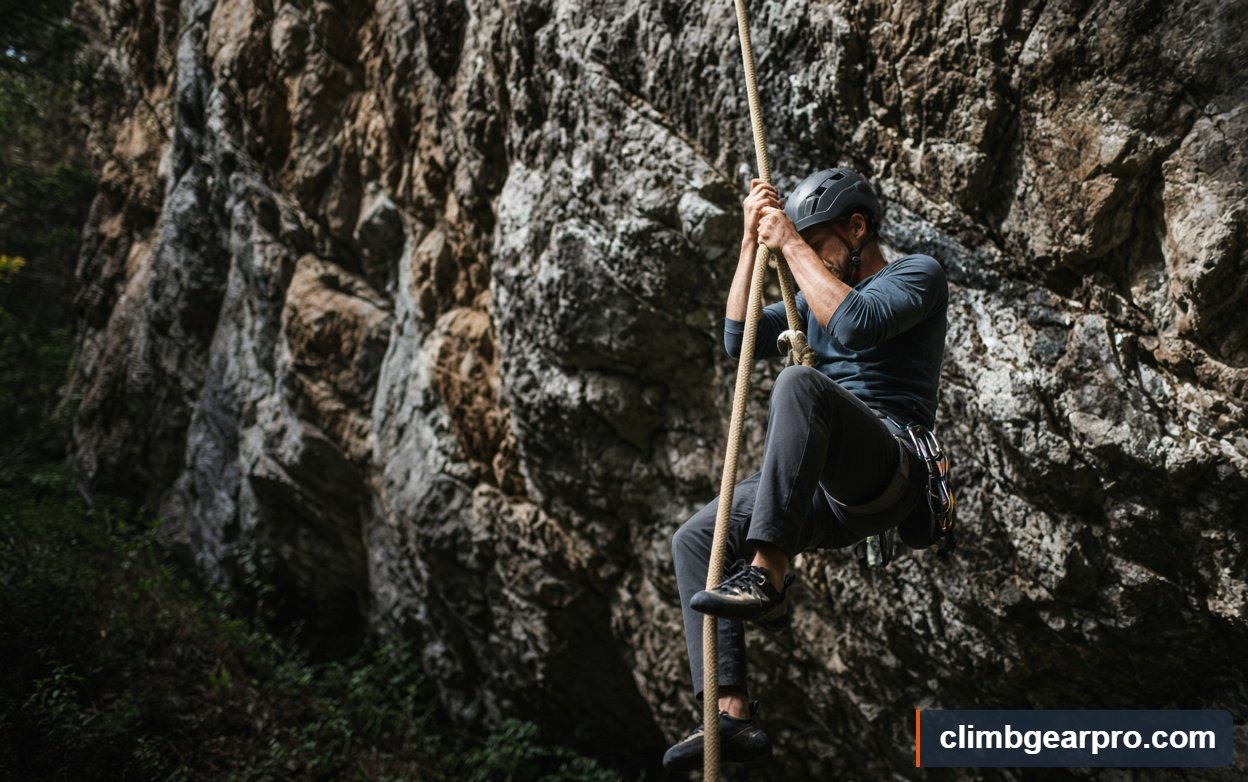
Rope Climbing For Kids
Children enjoy rope climbing in playgrounds. It helps develop motor skills and coordination. For kids:
- Use shorter, softer ropes.
- Always supervise.
- Teach proper technique early.
Rope Climbing In Fitness And Sports
Rope climbing is popular in modern fitness programs. CrossFit, for example, uses rope climbs in many workouts. In obstacle races like Spartan or Tough Mudder, rope climbs are common challenges.
A study from the Journal of Strength and Conditioning Research found that rope climbing improves muscular endurance by 12% over eight weeks in athletes.
| Activity | Rope Climbing Use | Benefits |
|---|---|---|
| CrossFit | Workouts, competitions | Strength, cardio |
| Obstacle Races | Challenges | Agility, endurance |
| Military Training | Tests, drills | Full-body fitness |
| Gymnastics | Skill practice | Coordination, balance |
Practical Tips For Better Rope Climbing
Here are some expert tips to improve your rope climbing experience:
- Chalk your hands: This reduces sweat and improves grip.
- Wear long socks or sleeves: They protect your skin from rope burns.
- Focus on legs: Use your legs to push, not just your arms.
- Practice grip off the rope: Squeeze a tennis ball or use grip trainers.
- Set goals: Track your progress and aim for higher climbs.
- Rest between climbs: Avoid overtraining, which can cause injuries.
- Visualize each move: Plan your steps before you climb.
Non-obvious insight: Many people underestimate the value of visualization. Thinking through each step before you climb can reduce mistakes.
Advanced Rope Climbing Skills
Once you’re comfortable with basic climbs, you can try advanced skills:
Speed Climbing
- Move quickly but stay safe.
- Time yourself and try to beat your record.
Weighted Climbs
- Wear a weight vest to increase difficulty.
- Only do this if you’re strong and experienced.
One-arm Climbs
- Use only one arm for part of the climb.
- This is very advanced—master regular climbs first.
Rope Traversing
- Move sideways along the rope.
- Used in military and ninja courses.
How To Prevent Rope Burns And Blisters
Rope burns and blisters are common. Here’s how to avoid them:
- Wear gloves: Some prefer thin climbing gloves.
- Cover skin: Long sleeves and pants help.
- Use proper technique: Pinch the rope between your feet, not your skin.
- Moisturize hands: Dry skin is more prone to blisters.
If you get a burn, wash with mild soap and cover with a bandage.
Maintenance And Care For Climbing Ropes
A rope that lasts needs proper care.
- Store ropes dry: Wet ropes can rot or become slippery.
- Check for frays: Inspect before every climb.
- Clean regularly: Wipe with a damp cloth.
- Replace old ropes: Don’t use ropes that show damage.
Environmental Considerations
If you climb ropes outdoors, weather and environment matter.
- Avoid wet ropes: Rain makes ropes slippery.
- Check anchors: Wind and weather can loosen anchors.
- Clean after use: Dirt and mud can damage ropes.
Rope Climbing For Different Fitness Levels
Anyone can climb a rope with practice. Adjust your approach based on your fitness.
Beginners
- Start with short, slow climbs.
- Use J-Hook or S-Wrap for support.
Intermediate
- Increase height and speed.
- Try no-leg climbs in short bursts.
Advanced
- Add weights.
- Try speed or one-arm climbs.
Frequently Asked Questions
How Do I Build Grip Strength For Rope Climbing?
Grip strength is key for rope climbing. Try exercises like dead hangs, farmer’s walks, and squeezing a tennis ball. Training your grip off the rope improves your climbing performance and reduces fatigue.
What Is The Best Rope Thickness For Beginners?
Most beginners find 1.5-inch ropes easiest to grip. Thicker ropes can be harder to hold, while thinner ropes may cause more burns. Choose a thickness that feels comfortable in your hand.
How Can I Avoid Rope Burns?
Wear long sleeves, pants, or socks. Use proper foot technique to pinch the rope with your shoes, not your skin. Some climbers use chalk or gloves for extra protection.
Is Rope Climbing Safe For Children?
Yes, with supervision. Use shorter, softer ropes and teach proper technique early. Always supervise children and provide mats under the rope for safety.
How Often Should I Practice Rope Climbing?
Two to three times per week is enough for most people. Rest between sessions to avoid overuse injuries. Consistent practice builds skill and strength over time.
Climbing a rope takes patience and practice. With the right technique, equipment, and safety steps, anyone can learn this useful skill. Remember to start slow, focus on form, and listen to your body. Whether you climb for fitness or fun, the benefits are real and lasting. For further reading on rope climbing history and techniques, check Wikipedia. With these tips, you’re ready to climb higher—one step at a time.
4 Comments