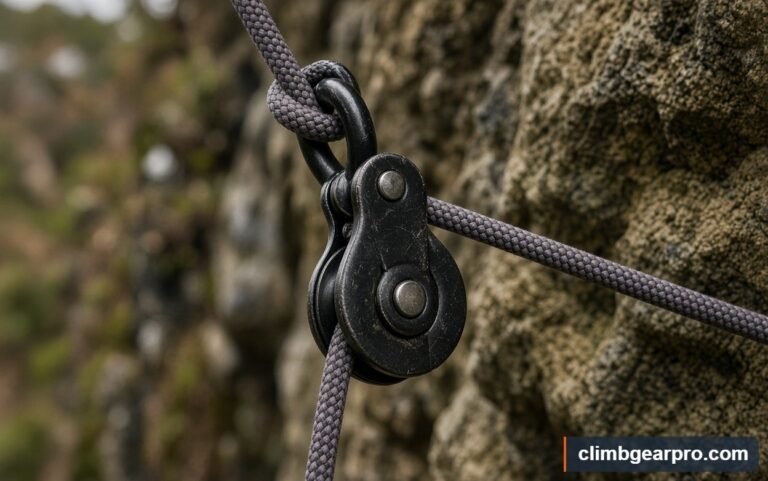
Tube Belay Device vs Assisted-Braking: Which to Use
A tube belay device and an assisted-braking device both do the same basic job: they add friction to the rope so your hands can hold a falling climber. The real question is which one fits how you climb, not which one is “better.”
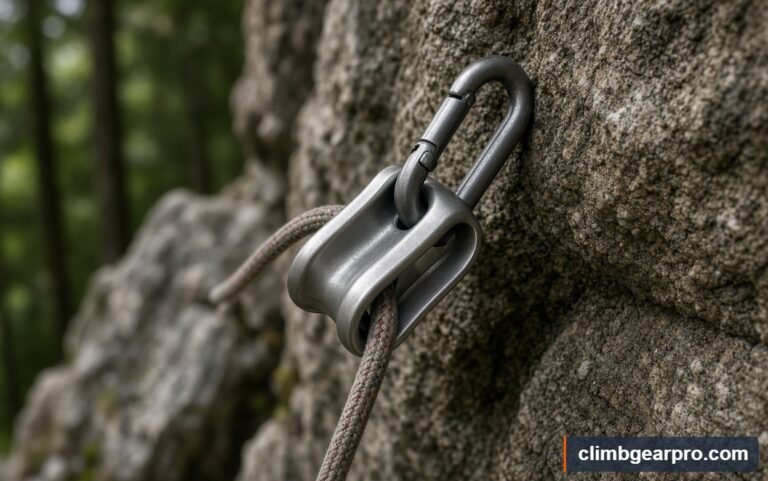
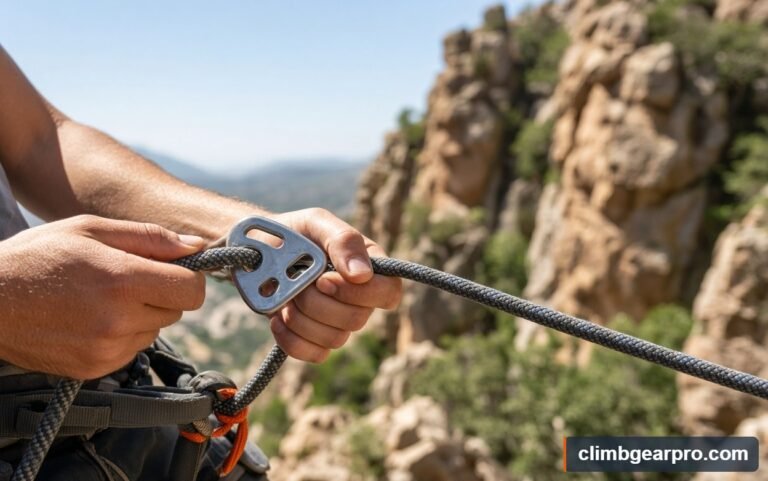
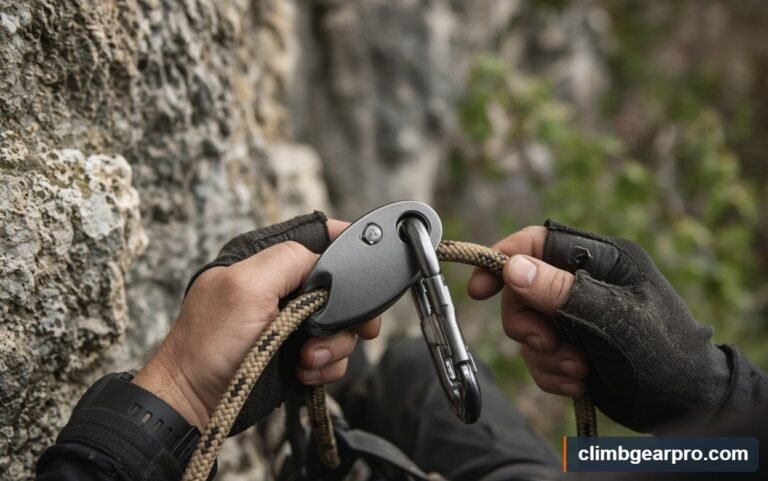
A tube device is a simple metal or plastic block with slots. The rope runs through it, and your brake hand does almost all the work. An assisted-braking device has a cam or a moving side plate. When the rope loads it, that part pinches or locks the rope for you — but only if you hold the brake strand correctly.
Here’s the counterintuitive part most guides skip: an assisted-braking device isn’t hands-free. It still needs a brake hand on the rope at all times. The “assist” helps in a panic or a hard catch, but it doesn’t replace technique.
This article covers how each type works, the trade-offs, a 60-second check, and when to retire your gear.
Key Takeaways
- What a Belay Device Actually Does: Every belay device works on one principle: friction. The rope bends through the device, and each bend adds resistance.
- Types of Belay Devices and How to Pick: Tube devices come in two flavors: basic (single strand) and guide-mode (two slots, often called an ATC-Guide or Reverso).
- The 60-Second Check Before You Buy: Before you spend money, check the rope you’ll actually use. Rope diameter decides which devices work.
- Tube vs Assisted-Braking: Side by Side: No belay device catches a fall by itself. The assist reduces the force your hand must hold, but a fully released brake strand still means a dropped climber.
- What These Devices Can’t Do: No belay device catches a fall by itself. The assist reduces the force your hand must hold, but a fully released brake strand still means a dropped climber.
- When to Retire It and When to Get a Pro: Belay devices are life-safety gear, so they have a service life.
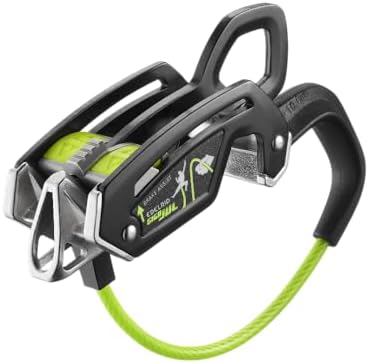
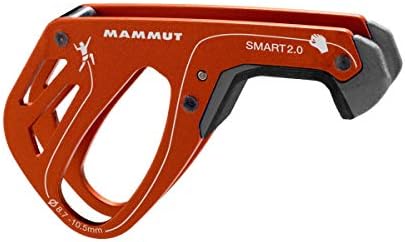
Recommended Products for Belay Devices





What a Belay Device Actually Does
Every belay device works on one principle: friction. The rope bends through the device, and each bend adds resistance. More bends and tighter angles mean more friction, which means your hand needs less grip strength to stop a fall.
A tube device gives you moderate friction. You control how much by how you hold the brake strand — down and to the side, never straight up. An assisted-braking device adds a spring-loaded cam or a pivoting plate that squeezes the rope when it’s pulled fast. This is why it’s called “assisted,” not “automatic.”
Two terms matter here. Brake strand is the rope end going from the device to your hand. Guide hand is the other hand, above the device, feeding rope. If you mix these up, the system fails.
For life-safety gear in the US, look for the UIAA 129 label or a CE mark with the EN 15151 standard. That standard covers belay devices, and it’s what tells you the device passed a real test.
Types of Belay Devices and How to Pick
Tube devices come in two flavors: basic (single strand) and guide-mode (two slots, often called an ATC-Guide or Reverso). Guide mode lets you belay a second climber directly off the anchor. That’s a big deal for multi-pitch climbing.
Assisted-braking devices split into two groups too. There are cam-based designs (like the Petzl GriGri) and plate-based designs (like the Edelrid Mega Jul). Both assist, but they behave differently on thin ropes and in guide mode.
The trade-off is real. A tube device is lighter, cheaper, and works with almost any rope diameter. An assisted-braking device costs more, weighs more, and some models struggle with very thin or very stiff ropes.
If you mostly top-rope and sport climb at a gym, a tube device is perfectly fine. If you belay heavier climbers or you’re learning, the assist gives you a safety margin. If you climb ice or wet rock, a tube device often handles a frozen or muddy rope better.
The 60-Second Check Before You Buy
Before you spend money, check the rope you’ll actually use. Rope diameter decides which devices work.
-
Find your rope’s diameter. It’s printed on the end or on the packaging — for example, 9.8 mm.
-
Read the device’s spec sheet. It lists a working range, like 8.9–10.5 mm.
-
If your rope sits outside that range, don’t buy that device. Too thin and the assist may not engage; too thick and it may jam.
-
Clip the device to your harness and thread the rope. Pull the brake strand hard. The device should lock or grip firmly.
-
If it slides freely with a hard pull, the rope is too thin for that device.
Do this check with the rope you’ll actually climb on, not a similar one at the shop counter. A 9.2 mm single and a 8.0 mm half rope can share a brand and color and still fall outside the same device’s range.
If you climb on two different ropes — a skinny one for hard projects, a thicker one for the gym — pick the device that covers both ranges, or expect to buy two. No single device covers everything from 7.5 mm twins to 10.5 mm workhorses.
If you can’t test before buying, buy from a retailer that takes returns on used gear. Thread the rope, pull hard at home, and send it back if it fails the check. That beats guessing from the spec sheet alone.
Tube vs Assisted-Braking: Side by Side
| Feature | Tube device | Assisted-braking |
|---|---|---|
| Weight | 50–80 g | 170–250 g |
| Price range | $20–$40 | $90–$130 |
| Rope range | Wide, 7.7–11 mm | Narrower, often 8.5–11 mm |
| Hands-free? | No | No — brake hand still required |
| Best for | Trad, alpine, thin ropes | Sport, gym, heavy loads |
| Guide mode | On guide models | On some models |
Choose a tube device if you climb trad or alpine, use varied rope sizes, or want the lightest kit. Choose assisted-braking if you mostly sport climb, belay heavier partners, or you’re still building belay habits. Neither replaces a brake hand.
What These Devices Can’t Do
No belay device catches a fall by itself. The assist reduces the force your hand must hold, but a fully released brake strand still means a dropped climber. That’s true for every model on the market.
Marketing leans hard on “auto-locking” and “anti-panic” language. Read the manual — most makers say plainly that the device is a backup, not a substitute for technique. The anti-panic feature on some models can even cause problems if it engages during a normal lower.
Evidence on real-world performance is thinner than you’d think. Most comparisons come from manufacturer testing, not independent field studies. That doesn’t mean the devices are bad — it means you should trust the standard, your manual, and your practice more than a product page.
When to Retire It and When to Get a Pro
Belay devices are life-safety gear, so they have a service life. Most manufacturers publish a maximum lifespan, but check your specific maker’s guidance, because it varies.
Retire your device if you see deep grooves worn into the metal, sharp edges, cracks, or a cam that no longer springs back cleanly. Also retire it after a hard fall where the device took a direct load, or if it’s been exposed to strong chemicals or extreme heat.
Inspect before every session. Run a finger along the rope path — it should feel smooth. Check the cam or plate moves freely. Look at the attachment point for wear.
Get a certified instructor or guide if you’re learning to belay, setting up a guide-mode anchor, or climbing multi-pitch for the first time. A blog can explain the idea; it can’t watch your hands.
Using and Caring for Your Device
Thread the rope the way your manual shows, not the way a friend shows you. Devices differ, and a wrong thread is a real hazard. If the manual is gone, find the model number stamped on the side plate and look up the current instructions from the maker.
Keep the brake strand down and to the side at all times. Feed rope with your guide hand, never your brake hand. When you lower, do it slowly and stay ready to lock off.
Clean your device with warm water and a soft brush if it gets gritty. Don’t use solvents. Dry it fully before storage.
Store it loose in a dry place, away from sunlight and chemicals. Don’t leave it clipped to a damp harness for months.
Log the first-use date so you know when its life is up. Retirement is counted from first use, not from the day you bought it, so a device that sat in a closet for two years is two years younger than its receipt suggests.
Related guides
FAQ
Is an assisted-braking device safer than a tube?
It adds a safety margin, especially for new belayers or heavy loads. But it isn’t safer if you don’t keep a brake hand on the rope. Technique matters more than the device.
Can I use any rope with any device?
No. Every device has a working diameter range. Check the spec sheet against your rope. Using a rope outside that range can stop the assist from working.
Do I still need a brake hand with a GriGri or similar?
Yes. Every manufacturer says so. The cam assists, but your hand is what actually stops the fall.
How long does a belay device last?
Many makers list around 10 years from first use. Check your specific brand’s guidance, and retire early if you see wear, cracks, or a damaged cam.
Is a tube device good for beginners?
Yes, if you learn proper brake-hand technique. Some instructors prefer starting with a tube so you build the habit before adding an assist.
Can I belay two ropes with one device?
Some tube devices and guide models can, for twin or half ropes. Check the manual — not every device supports it.
What’s guide mode?
It’s a setup where the device locks off a second climber’s rope directly from the anchor. It lets you belay from above without holding the full weight.
Do assisted-braking devices work in the rain or cold?
Often, but a wet or icy rope can affect how the cam grips. A tube device tends to be more predictable in bad conditions.
Should I replace my device after one big fall?
Not always. Inspect it for damage. If the metal is grooved, cracked, or the cam is damaged, retire it. If it looks fine, keep using it.
Can I use a tube device for rappelling?
Yes. Most tube devices work for rappelling, and many people prefer them for it because the friction is smooth and predictable.
The Bottom Line
Pick the device that matches your climbing, not the one with the best marketing. Sport and gym climbers usually do well with an assisted-braking device. Trad, alpine, and mixed-condition climbers often prefer a tube.
Whatever you choose, the brake hand is the real safety system. Keep it on the rope, check your rope diameter against the device spec, and retire gear when it shows wear. The device assists — you stop the fall.
One more thing decides it: how often you climb. If you get out a few times a season, take the tube. It’s cheaper, it handles any rope you own, and the habits it teaches are the ones you want. If you climb indoors twice a week, take the assisted-braking device, because tired hands at the end of a session are when a tube gets away from people.