
How Long Do Climbing Ropes Last? When to Retire Yours
A climbing rope doesn’t last indefinitely, and it needs retiring sooner if it’s taken hard falls or shows damage.
Here’s the problem. A rope can look perfectly fine and still be unsafe. The damage that matters is often invisible — tiny cuts inside the core, or fibers weakened by stress. That’s why climbers get nervous about this question. There’s no simple “replace it every X months” rule that works for everyone.
So how does a climbing rope actually work? It has two parts. The core (the inside) carries almost all the load. The sheath (the outside) protects the core from abrasion and cuts. When the sheath wears thin, the core loses its protection. When the core gets cut or damaged, the rope can fail.
Key Takeaways
- What a Climbing Rope Really Is and How It Works: A modern climbing rope is a kernmantle design — that’s just a fancy word for “core and sheath.”
- Types of Climbing Ropes and How to Choose: Ropes come in three main types, and picking the wrong one for your climbing style is a common and expensive mistake.
- The One-Minute Rope Check: Run your hand along the entire rope from end to end. This takes about a minute and tells you more than any date stamp.
- Single vs. Half Ropes: What People Confuse: The biggest confusion for new climbers is single vs. half ropes.
- What a Rope Can’t Do: A climbing rope is strong, but it has real limits that marketing tends to blur.
- When to Retire It and When to Get a Pro: Retire a rope immediately if you find any of these: a core shot, a flat or soft spot longer than a few inches, heavy glazing over a large area, a sheath that’s worn through to the core, or…
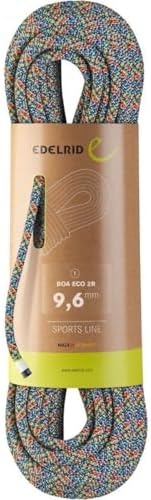
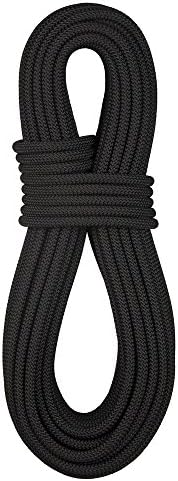
Recommended Products for Climbing Ropes




What a Climbing Rope Really Is and How It Works
A modern climbing rope is a kernmantle design — that’s just a fancy word for “core and sheath.” The core is made of twisted nylon strands that stretch and absorb energy when you fall. The sheath is a tightly woven outer layer that takes the wear.
Ropes are tested to hold a certain number of fall factors.
To check a rope’s rating, look for the UIAA label. The UIAA 101 standard sets the rules for dynamic ropes: they must survive at least 5 falls, keep impact force under 12 kN for a single rope, and show no more than 2 mm of sheath slippage. The CE EN 892 standard is the European equivalent and covers the same ground.
Types of Climbing Ropes and How to Choose
Ropes come in three main types, and picking the wrong one for your climbing style is a common and expensive mistake. Here’s how they compare.
| Type | Diameter | Best For | Trade-off |
|---|---|---|---|
| Single rope | 9.4–11 mm | Sport, trad, top-rope | Heaviest, but simplest to use |
| Half rope (double) | 7.5–9 mm | Trad, alpine, wandering routes | You need two, and you clip them alternately |
| Twin rope | 7.5–8.5 mm | Ice, alpine, straight lines | Both ropes clip into every piece — less versatile |
| Gym/indoor rope | 9.8–11 mm | Plastic holds, top-rope | Thick and durable, but heavy to carry outside |
For most people starting out, a single rope between 9.8 and 10.2 mm is the right choice.
The honest trade-off: thinner ropes are lighter and feed better, but they wear out faster and are harder to grab. Thicker ropes last longer and are easier to handle, but they’re heavier. Match the rope to the climbing you actually do, not the climbing you hope to do someday.
The One-Minute Rope Check
Run your hand along the entire rope from end to end. This takes about a minute and tells you more than any date stamp. Here are the steps.
- Squeeze the rope between your thumb and fingers every arm’s length. You’re feeling for soft spots, flat spots, or places where the core feels thin.
- Look at the sheath in bright light. Check for glazing (shiny, melted-looking spots), fuzzy patches, or places where you can see the core through the weave.
- Check both ends for about 3 feet (1 meter). This is where most wear happens. Look for cuts, core shots (where the core pokes through), or heavy fraying.
- Bend the rope into a tight U at several points. If it feels stiff or crunchy, the core may be damaged.
- Compare the middle to the ends. The middle should feel similar — if it’s noticeably thinner or softer, the rope is worn.
If you find a core shot, flat spot, or crunchy section, stop using the rope for climbing. A rope with a core shot can be cut there and used shorter, if the remaining length is safe and you mark it clearly.
Single vs. Half Ropes: What People Confuse
The biggest confusion for new climbers is single vs. half ropes.
| Feature | Single Rope | Half Rope |
|---|---|---|
| Number needed | One | Two |
| How you clip | Both strands through every piece | Alternating strands |
| Impact force | Higher (up to 12 kN) | Lower per strand |
| Weight | Heavier per rope | Lighter per rope, but two ropes |
| Best use | Sport, top-rope, simple trad | Alpine, wandering trad, ice |
| Belay device | Standard tube or assisted-braking | Needs a device that handles two ropes |
Choose a single rope if you’re climbing in a gym, doing sport routes, or top-roping outdoors.
One more confusion: dynamic vs. static. Static ropes barely stretch and are for hauling, rigging, or rescue — never for catching falls. If you fall on a static rope, the shock can injure you or break your gear.
What a Rope Can’t Do
A climbing rope is strong, but it has real limits that marketing tends to blur. Here’s what it can’t do.
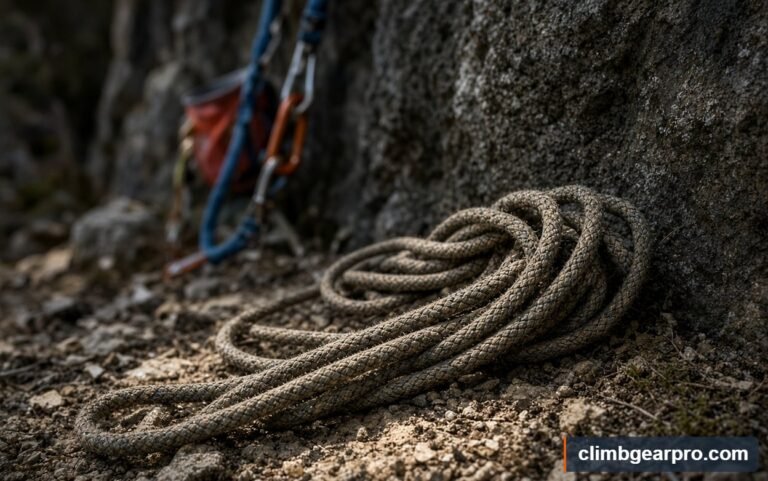
A rope can’t tell you it’s damaged. Unlike a worn tire or a cracked helmet, a rope with a compromised core often looks fine from the outside. That’s why the hand-feel check matters more than a visual inspection.
A rope can’t survive everything. Sharp edges cut ropes. Repeated falls on the same spot weaken them. Chemicals like battery acid, bleach, and some solvents destroy nylon — and you might not notice until it fails. If a rope touches a strong chemical, retire it.
A rope can’t last forever, no matter how well you treat it. Nylon degrades over time from UV light, heat, and oxygen. Most manufacturers recommend retiring any rope after a set number of years from the date of manufacture, even if it’s never been used. That’s not a marketing trick — it’s a real material limit.
Where the evidence is thin: there’s no exact formula that says “X number of falls equals retirement.” Fall counts are a rough guide, not a rule. A rope that’s taken 20 small falls on a soft catch may be fine, while a rope that’s taken 3 hard factor-2 falls may be done. Use fall counts as one signal among several, not the final word.
When to Retire It and When to Get a Pro
Retire a rope immediately if you find any of these: a core shot, a flat or soft spot longer than a few inches, heavy glazing over a large area, a sheath that’s worn through to the core, or stiffness that doesn’t go away. Also retire it if it’s been exposed to a strong chemical, or if it’s past its recommended age.
Most manufacturers recommend retiring a rope after 10 years from manufacture, regardless of use. For heavily used ropes, many makers suggest a working life of 3 to 5 years. Check your rope’s specific manufacturer guidance — Mammut, Petzl, and Sterling all publish their own recommendations, and they can differ.
You can find your exact figure on two things — the date on the rope’s end label and the feel of the rope in your hands today. If either one worries you, retire it. Ropes are cheaper than a hospital visit.
When to get a pro: if you’re unsure whether a rope is safe, take it to a certified climbing instructor or a guide. They can inspect it in person. Don’t rely on a forum post or a friend’s opinion for a life-safety call. If you’re ever in doubt, retire the rope. There’s no prize for squeezing extra months out of a worn rope.
How to Use and Care for Your Rope
Good care adds years to a rope’s life. Here’s what actually works.
Inspect before every climb. Run the one-minute check from earlier. It takes less time than tying your shoes.
Keep it clean. Dirt and grit work into the sheath and grind the core. Wash your rope in lukewarm water with a mild soap (not detergent) in a bathtub, then rinse well. Don’t use a washing machine — the agitation can damage it.
Store it right. Keep your rope in a cool, dry, dark place. A rope bag works well. Avoid hot cars, damp basements, and direct sunlight. UV light and heat are the two biggest enemies.
Use a rope bag or tarp. This keeps the rope out of dirt and off abrasive surfaces. It also makes coiling faster.
Avoid sharp edges. Use edge protection on rock. Even a rounded edge can cut a rope under load.
Don’t step on your rope. Dirt and grit from your shoes work into the fibers. It sounds fussy, but it’s real.
Track the falls. Write the date of any big fall on a piece of tape near the end, or keep a note on your phone. It helps you judge wear over time.
Retire it properly. Cut the rope into short sections and throw it away, or recycle it if your local gear shop has a program. Never sell or give away a retired rope as climbing gear.
Related guides
- Dynamic vs Static Rope: How to Choose the Right Climbing Line
- How to Wash a Climbing Rope Safely to Extend Its Lifespan
FAQ
How long do climbing ropes last?
Most ropes last a few years with regular use, or longer if stored well and used lightly. The date of manufacture matters, but so does how much the rope has been fallen on and how it’s been stored.
Can I use a rope that’s been in storage for 5 years?
Maybe. If it’s been kept cool, dry, and out of sunlight, it may still be fine. Inspect it carefully and check the manufacture date. If it’s near or past 10 years, retire it.
How many falls can a rope take?
UIAA testing requires at least 5 factor 1.77 falls. In real use, a rope can handle many more small falls. But hard falls on the same spot weaken it faster. There’s no exact number — use the hand-feel check.
What is a core shot?
A core shot is when the inner core pokes through the outer sheath. It usually happens near the ends or on sharp edges. A rope with a core shot isn’t safe for climbing.
Can I cut a damaged rope and keep using it?
Yes, if the damage is near one end and the remaining length is still long enough for your climbs. Cut well past the damaged section and mark the new end. Never use a rope with damage in the middle.
Does rope color matter?
Not for safety. Color helps you see the rope and identify it, but it has no effect on strength or lifespan.
How do I know if my rope is too old?
Check the manufacture date on the end label. If it’s past its recommended age, retire it. If it’s older and shows wear, retire it sooner.
Can I wash my climbing rope?
Yes. Use lukewarm water and mild soap in a bathtub. Rinse well and hang it to dry out of direct sunlight. Never use a washing machine or harsh detergent.
Do I need a special rope for gym climbing?
A thicker single rope (9.8–10.5 mm) works well for gym and top-rope climbing. It lasts longer against plastic holds. You don’t need an expensive rope for indoor use.
What’s the difference between dynamic and static ropes?
Dynamic ropes stretch to absorb falls and are for climbing. Static ropes barely stretch and are for hauling or rigging. Never climb on a static rope.
The Bottom Line
The key decision is simple: retire your rope when it shows damage, when it’s taken heavy falls, or when it reaches its recommended age — whichever comes first. Don’t wait for a calendar reminder. Check the rope with your hands before every climb, and trust what you feel.
The single most important takeaway: a climbing rope is life-safety gear, and there’s no bargain worth your safety. If you’re unsure about a rope’s condition, retire it. A new rope costs far less than the alternative.



3 Comments