
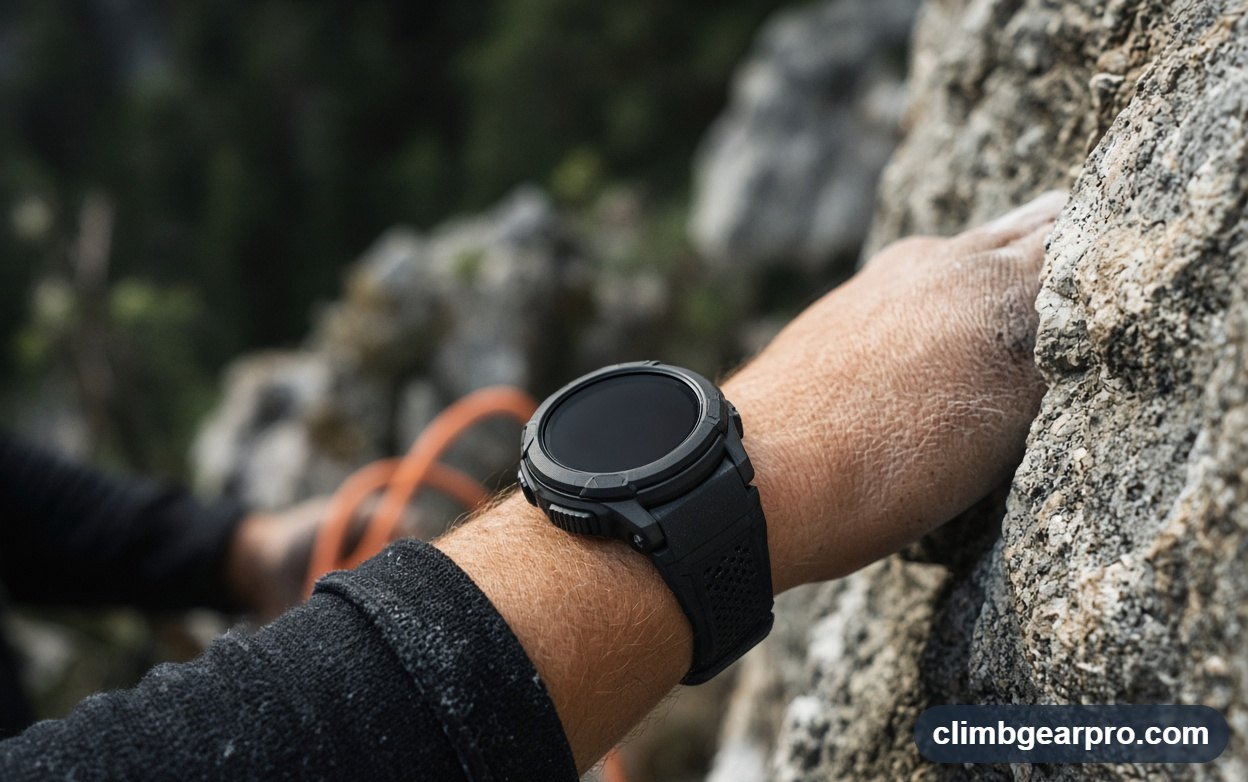
10 Best Watches for Rock Climbers (2026): Tough GPS Picks
Looking for the best watch for rock climbers? A climbing watch has to survive scrapes, track your approach and last all day without charging. We compared the manufacturer specs and public buyer feedback to pick 10 GPS and rugged watches, from tough budget options to premium Garmin and Suunto models.
Key Takeaways
- Best overall: Garmin fenix 8 for climbers who want one watch for the approach, the crag and the walk out.
- Best value rugged: Garmin Instinct 3 or the Casio Pro Trek if you want durability without flagship pricing.
- Best battery: Garmin Enduro 3 and the solar fenix 7X Pro for long days away from a charger.
- Reality check: No watch replaces your belay check, and wrist heart-rate readings get unreliable when you grip hard.
Best Watches for Rock Climbers at a Glance
| # | Product | Best For | Standout | Score | |
|---|---|---|---|---|---|
| 1 | Garmin fenix 8 (47mm) | Serious climbers who also hike, run and ski | Premium all-round outdoor | 9.4 | Check Price → |
| 2 | Garmin fenix 7X Pro Solar | Multi-day trips and big-wall approaches | Solar charging, built-in flashlight | 9.2 | Check Price → |
| 3 | Garmin Instinct 3 AMOLED (45mm) | Climbers who want a tough, simpler Garmin | Rugged build, simpler price tier | 9.0 | Check Price → |
| 4 | Suunto Vertical (Solar) | Alpine approaches and route finding | Mountain-focused GPS watch | 9.0 | Check Price → |
| 5 | Casio Pro Trek PRJ-B001 | Climbers who want a tough solar watch without GPS pricing | Solar power, outdoor sensors | 8.5 | Check Price → |
| 6 | Garmin Enduro 3 (51mm) | Multi-day objectives and ultra-long days | Ultra-endurance battery design | 8.9 | Check Price → |
| 7 | Amazfit T-Rex 3 Pro | Budget-minded climbers who still want an AMOLED screen | Rugged style with AMOLED and sapphire glass | 8.6 | Check Price → |
| 8 | COROS PACE Pro | Climbers who dislike heavy watches on the wrist | Light, comfortable sport watch | 8.4 | Check Price → |
| 9 | Apple Watch Ultra 3 | Climbers already in the Apple ecosystem | Tight iPhone integration | 8.8 | Check Price → |
| 10 | Garmin Forerunner 965 | Runners and triathletes who climb on the side | Light AMOLED training watch | 8.2 | Check Price → |
The 10 Best Watches for Rock Climbers, Reviewed

Garmin fenix 8 (47mm)
Best for: Serious climbers who also hike, run and skiThe fenix 8 is the watch most outdoor sports brands benchmark against. It pairs multisport GPS tracking with a long list of outdoor sensors and activity profiles, including climbing modes, so one watch covers the approach, the session and the walk out. The 47mm case suits most wrists.
Pros
- Deep outdoor feature set
- Climbing activity profiles
- Strong build for scrapes and bumps
Cons
- Premium price
- Feature list takes time to learn
Skip it if: you only want a basic activity tracker. A cheaper rugged watch will do the job.
Check Price on Amazon →
Garmin fenix 7X Pro Solar
Best for: Multi-day trips and big-wall approachesThe 7X Pro Solar is the larger, battery-focused fenix. Solar charging stretches runtime on long days outside, and the built-in flashlight is handy for early starts and headlamp-free walk-outs. It is a big watch, so it sits tall on the wrist.
Pros
- Solar charging extends battery
- Built-in flashlight
- Rugged multisport build
Cons
- Large and heavy on small wrists
- Newer fenix models add features
Skip it if: you have a small wrist or find big watches annoying when you crimp and mantle.
Check Price on Amazon →
Garmin Instinct 3 AMOLED (45mm)
Best for: Climbers who want a tough, simpler GarminThe Instinct line is Garmin’s rugged-and-simple tier. The AMOLED 45mm version gives you a bright screen and core outdoor GPS features without the full fenix price. It is a strong pick if you want durability first and a long feature list second.
Pros
- Rugged by design
- Bright AMOLED display
- Lower price than fenix
Cons
- Fewer advanced training tools
- AMOLED can use more battery than basic screens
Skip it if: you want the deepest mapping and training features on offer.
Check Price on Amazon →
Suunto Vertical (Solar)
Best for: Alpine approaches and route findingSuunto built the Vertical for mountain use. It offers a large sport profile list, solar charging on the solar models and mapping aimed at hikers and alpinists. For climbers who spend more time on the approach than on the wall, it is a serious contender.
Pros
- Mountain-first design
- Solar charging on solar versions
- Large sports list
Cons
- Smartwatch extras are limited
- Check the exact variant before buying
Skip it if: you want a big app store and smartphone-style features on the wrist.
Check Price on Amazon →
Casio Pro Trek PRJ-B001
Best for: Climbers who want a tough solar watch without GPS pricingThe Pro Trek line is Casio’s outdoor series. The PRJ-B001 uses Tough Solar charging and outdoor sensors in a durable case, so it behaves like a classic mountain watch rather than a smartwatch. Check the listing for the exact sensor set before you order.
Pros
- Solar powered
- Classic durable design
- Lower price than GPS watches
Cons
- No full GPS multisport tracking in the same class
- Less training data
Skip it if: you want route tracking, maps and training metrics.
Check Price on Amazon →
Garmin Enduro 3 (51mm)
Best for: Multi-day objectives and ultra-long daysThe Enduro line is built around battery life. The 51mm Enduro 3 adds solar charging and sapphire glass to a lightweight, large-screen design, which suits long alpine days when charging is not an option. It is aimed at endurance athletes, but the battery matters to climbers too.
Pros
- Very long battery focus
- Solar and sapphire glass
- Light for its size
Cons
- Large case
- Priced for endurance athletes
Skip it if: your longest outing is a few hours at the crag.
Check Price on Amazon →
Amazfit T-Rex 3 Pro
Best for: Budget-minded climbers who still want an AMOLED screenThe T-Rex 3 Pro brings a rugged look, an AMOLED display and sapphire glass at a smaller price than the big-name outdoor brands. It works with iOS and Android and is a sensible first sport watch for climbers who do not need Garmin-level mapping.
Pros
- AMOLED screen
- Sapphire glass
- Works with iOS and Android
Cons
- Less polished outdoor ecosystem
- Fewer mountain-specific tools
Skip it if: you need dependable mapping for remote terrain.
Check Price on Amazon →
COROS PACE Pro
Best for: Climbers who dislike heavy watches on the wristCOROS focuses on light, comfortable sport watches. The PACE Pro has a 1.3-inch AMOLED touchscreen and a low weight, which matters when a bulky watch bangs on holds. It is more of a running and training watch than a mountain tool.
Pros
- Lightweight and comfortable
- AMOLED touchscreen
- Good value among sport watches
Cons
- Not built as a mountain-first watch
- Less rugged feel
Skip it if: you scramble over rough rock and want the toughest case.
Check Price on Amazon →
Apple Watch Ultra 3
Best for: Climbers already in the Apple ecosystemThe Ultra 3 is Apple’s toughest watch, with a large, bright screen and GPS plus cellular. It makes sense if you carry an iPhone and want one watch for notifications, safety features and outdoor tracking. It is not a dedicated climbing computer.
Pros
- Tight iPhone integration
- Large bright display
- Cellular option for safety
Cons
- Needs frequent charging compared with Garmin or Suunto
- Android phones are not supported
Skip it if: you use an Android phone or need multi-day battery.
Check Price on Amazon →
Garmin Forerunner 965
Best for: Runners and triathletes who climb on the sideThe Forerunner 965 is a running and triathlon watch with a bright AMOLED screen and detailed training metrics. It is lighter than the fenix range and is a good choice if running is your main sport and climbing is your hobby.
Pros
- Light and comfortable
- Bright AMOLED screen
- Detailed training tools
Cons
- Not built for rough rock contact
- Less outdoor ruggedness
Skip it if: you mostly climb and rarely run.
Check Price on Amazon →What Climbers Need From a Watch
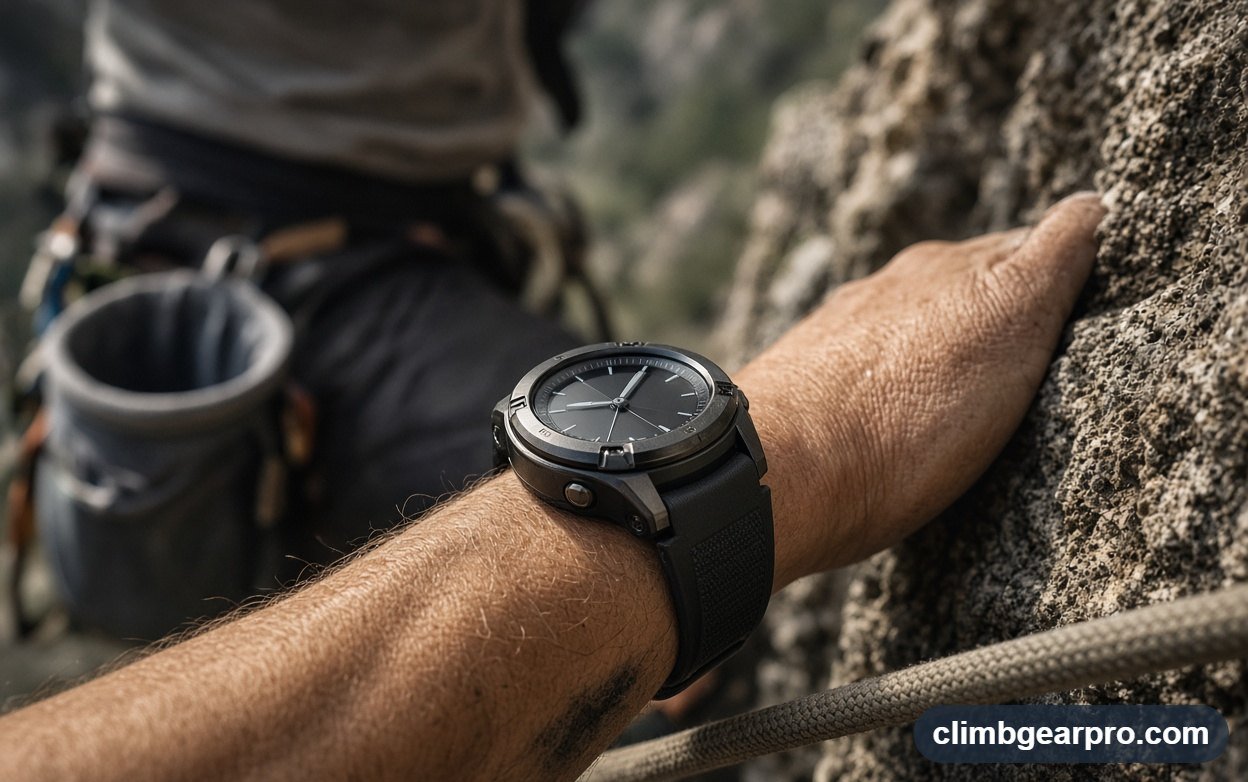
Climbing is hard on wrists. You smear them on rock, bump them on holds and strap them under harness sleeves. The best climbing watch has a scratch-resistant lens such as sapphire glass, a case that handles knocks, a reliable altimeter and barometer for the approach, and enough battery for a full day. Smartwatch extras matter far less than durability.
Sapphire Glass, Altimeter and Battery Explained
Sapphire glass resists scratches far better than standard glass, which matters when you rub the wrist against rock. A barometric altimeter helps you track elevation on the approach and warns you about weather changes. Battery life is where models differ most, so check the rated runtime for GPS mode, not just smartwatch mode.
Which Type of Watch Fits You
| Type | Best For | Trade-off |
|---|---|---|
| Premium multisport (fenix, Enduro) | All-round outdoor use and long days | Highest price |
| Rugged mid-tier (Instinct, T-Rex) | Durability on a budget | Fewer advanced tools |
| Mountain-first (Suunto Vertical) | Alpine navigation | Smaller app ecosystem |
| Classic solar (Casio Pro Trek) | Simple, tough and cheap | No full GPS tracking |
| Light sport (COROS, Forerunner) | Runners who also climb | Less rugged |
Where to Wear It While Climbing
Many climbers wear the watch on the non-dominant wrist and loosen the strap a notch for climbing. Some swap it onto the harness or pack for hard sport routes or bouldering, because a watch against rock wears the lens and case faster than any other gear you carry.
Heart Rate and Climbing Do Not Mix Well
Wrist optical heart-rate sensors struggle when you grip hard, because tight forearms disturb the signal. Treat heart-rate data from the crag as a rough guide. If you care about accuracy, a chest strap gives a cleaner reading.
How to Choose a Climbing Watch in 5 Steps
- Decide whether you need GPS tracking or just an altimeter and compass.
- Set a budget and remember rugged models sit in the middle price range.
- Check the rated battery life in GPS mode, not smartwatch mode.
- Pick a case size you can wear under a jacket sleeve and a harness.
- Buy from a seller with an easy return window so you can test the fit.
Dos and Don’ts
Do
- Look for sapphire glass or a hard protective bezel
- Check battery rating in GPS mode
- Pair the watch with a phone app you already like
- Clean salt and chalk off the case after sessions
Don’t
- Rely on a watch for belay or safety decisions
- Trust wrist heart rate when gripping hard
- Buy the biggest case if you have a small wrist
- Ignore firmware updates for GPS accuracy
Honest Limits
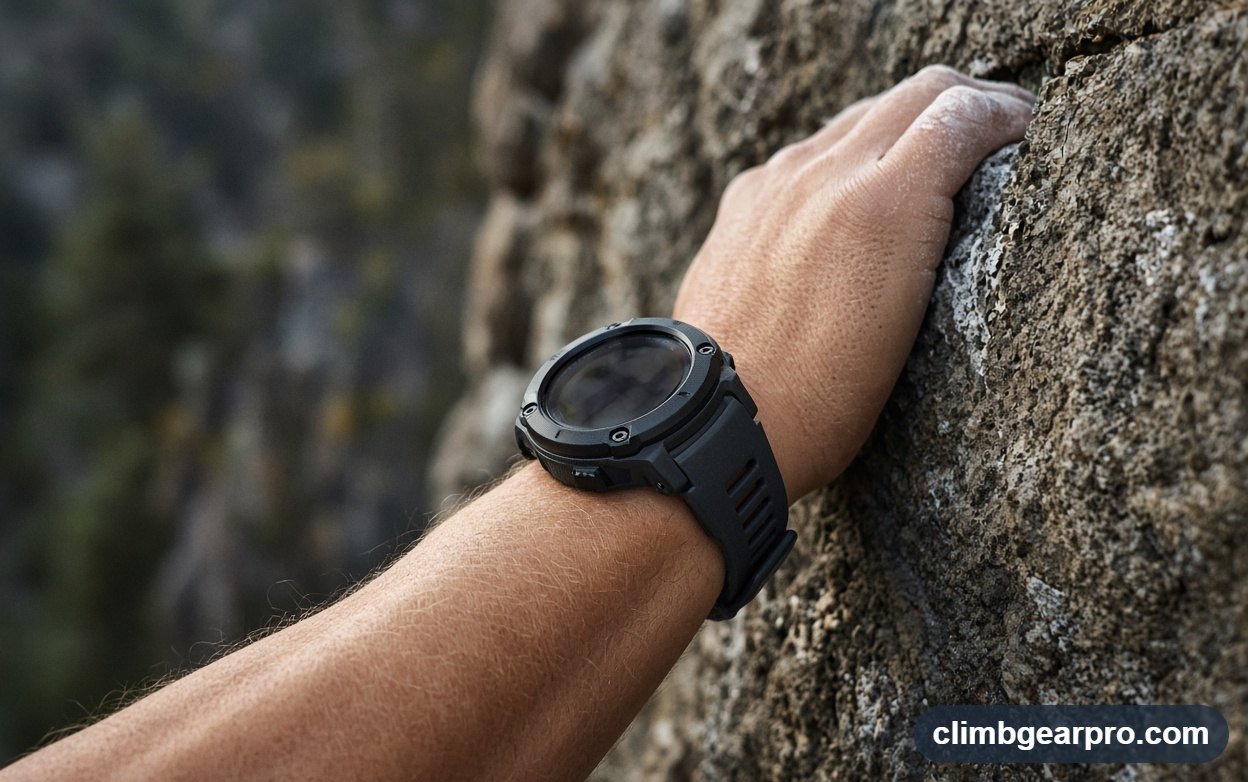
A watch cannot replace route knowledge, a compass and map, or your climbing partner. GPS signal can drop in deep canyons and under heavy rock overhangs, and battery claims depend on settings. Many of these watches are designed more for hikers, runners and ultra athletes than climbers, so you are paying for features you may never use. A cheaper rugged watch is perfectly fine for most crag days.
Frequently Asked Questions
What is the best watch for rock climbers?
For most climbers the Garmin fenix 8 is the strongest all-rounder, while the Instinct 3 and Casio Pro Trek cover tougher, simpler needs at lower prices.
Do I need GPS for climbing?
Not for cragging. GPS helps on approaches, long multi-pitch days and alpine routes where tracking your route and getting back matters.
Is sapphire glass worth it?
Yes if you are hard on gear. It resists scratches much better than standard glass, though it can still crack on a hard knock.
Can I wear a watch while climbing?
You can, but many climbers move it to a pack or harness for hard routes or bouldering to protect it from rock contact.
Are cheap rugged watches good enough?
For many climbers, yes. The Casio Pro Trek and Amazfit T-Rex 3 Pro give you solid durability for much less than premium Garmin models.
The Bottom Line
The Garmin fenix 8 is the best watch for rock climbers who want one tool for every outing, and the Instinct 3 is the sensible rugged pick for everyone else. If you want maximum battery, look at the Enduro 3. If you mainly want a tough, simple watch, the Casio Pro Trek keeps it cheap.
Whatever you choose, treat the watch as a convenience, not a safety device. Check your knots, your belay setup and your partner every time.
One Comment