
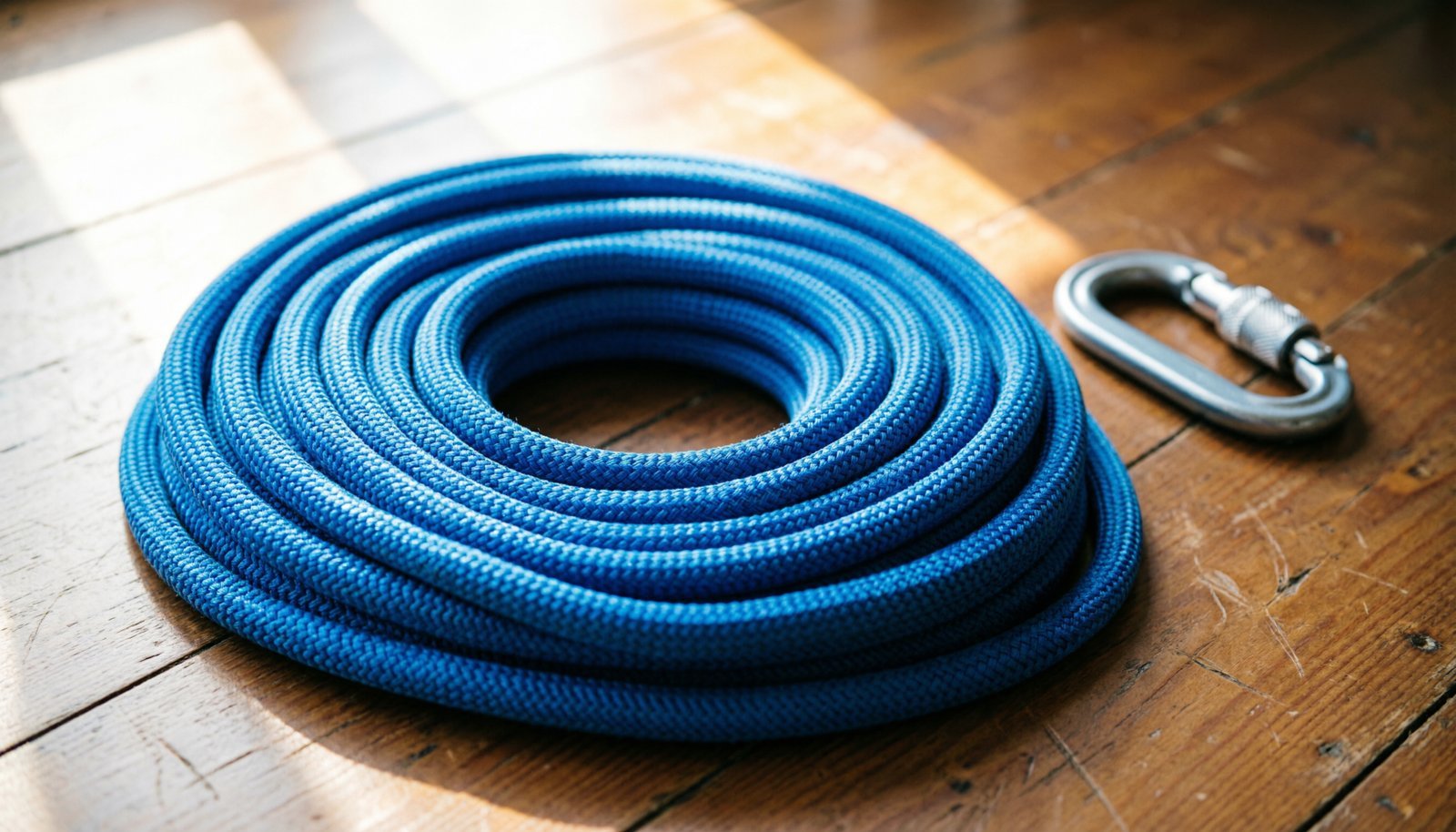
How to Wash a Climbing Rope Safely to Extend Its Lifespan
To clean your cord safely, wash it in a tub of cool water with mild soap and let it air dry away from heat. Dirt and rock dust act like tiny knives inside the fibers, slowly cutting away strength every time the rope bends under body weight. Washing flushes those sharp mineral grit particles out of the woven core.
Many climbers worry that getting a dynamic rope wet ruins its internal elasticity or breaks down the nylon. In reality, clean water doesn’t damage modern polyamide fibers at all, though it does make wet nylon temporarily weaker until it dries completely. The real danger is using hot water, harsh household detergents, or direct heat sources like hair dryers.
This guide covers the right way to soak and scrub your rope, the differences between machine washing and hand tub washing, and how to spot real sheath damage before your next climbing day.
Key Takeaways
- Wash with cool water and a mild, additive-free soap — never bleach or harsh detergent.
- Machine-wash only on a gentle, cold cycle inside a mesh bag, or hand-wash in a tub.
- Air-dry loosely coiled, out of direct sunlight; never use a dryer or radiator.
- Run the pinch test to check the core for flat spots before and after washing.
- Washing removes grit that abrades fibers, but it cannot restore a rope that is already worn out.
- Retire the rope after a major fall, sheath damage, or once it passes its lifespan — washing will not fix that.
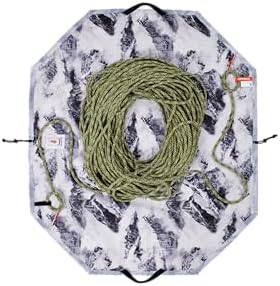
- A rope bag or tarp keeps grit off in the first place, so you wash far less often.
On this page
- How Rope Washing Works and the Safety Standards Behind It
- Choosing Your Washing Method: Tub vs. Machine
- The Pinch Test: Check Your Core in Under a Minute
- Specialty Rope Cleaners vs. Mild Household Soap
- What Washing Can and Can’t Do
- When to Retire It and When to Call a Pro
- Step-by-Step Washing, Drying, and Storage
- Frequently Asked Questions
- Conclusion
Recommended Products for Rope Care




How Rope Washing Works and the Safety Standards Behind It
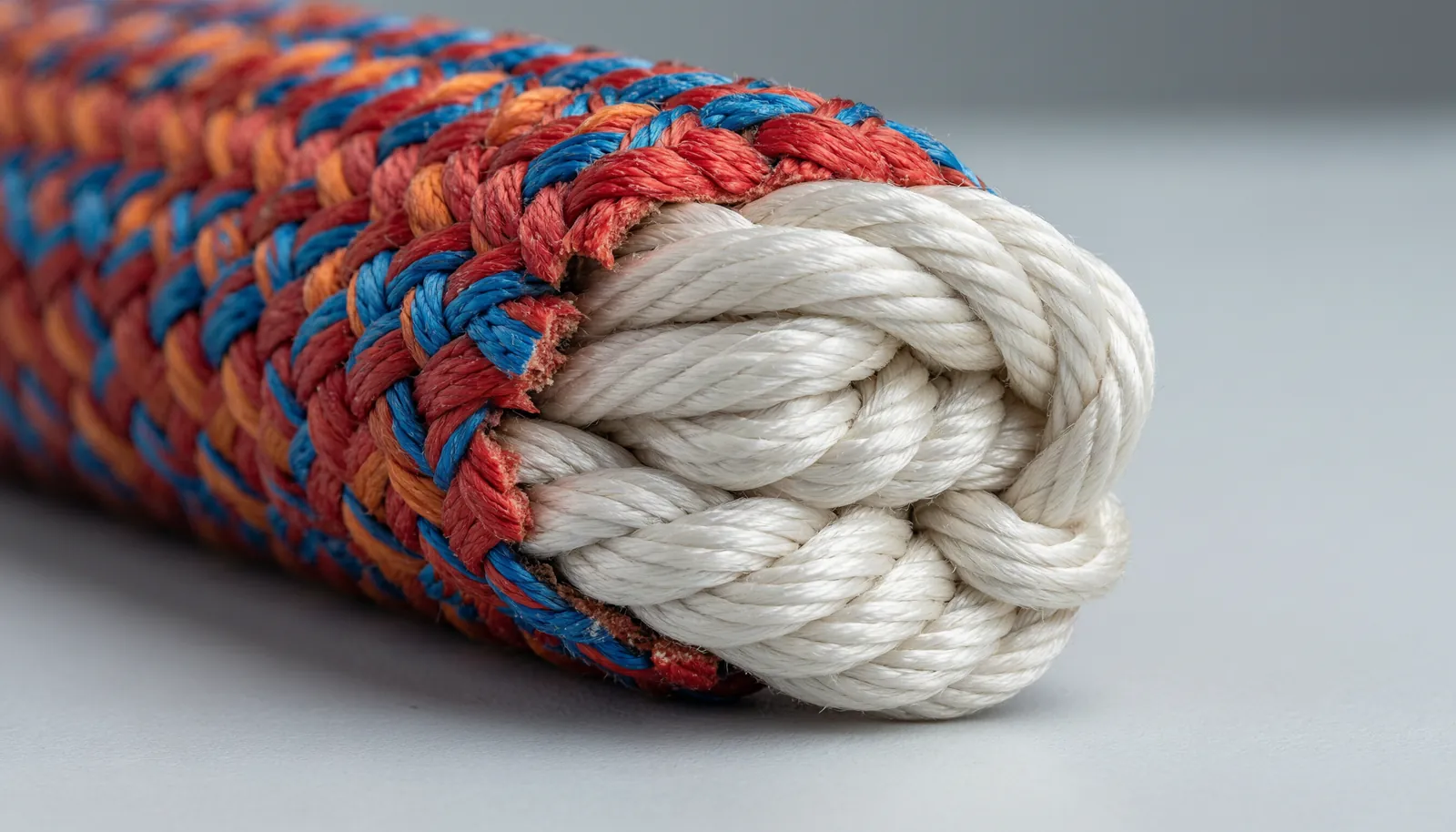
A climbing rope uses a kernmantle design. The “kern” is the inner twisted core that holds most of the load during a fall, while the “mantle” is the braided outer sheath that protects the core from dirt, sharp rock edges, and abrasion.
When grit works its way through the sheath into the core, it rubs against the weight-bearing strands. Over time, that internal abrasion degrades dynamic stretch, making lead falls feel harder and reducing overall rope lifespan. Cleaning removes this grit and keeps the sheath flexible so it feeds smoothly through belay devices.
Dynamic climbing ropes must meet the UIAA standard for dynamic ropes published by the International Climbing and Mountaineering Federation. These standards define minimum impact-force absorption and how many laboratory falls a rope must hold before failure. Washing correctly preserves these mechanical traits, while harsh chemicals can compromise them without showing visible surface damage.
Choosing Your Washing Method: Tub vs. Machine
You can wash your gear by hand in a bathtub or use a front-loading washing machine. Both methods work well, but they come with different trade-offs regarding time, control, and convenience.
A standard bathtub soak gives you complete control over water temperature and rope agitation. It takes more physical effort, but you completely avoid the mechanical stress of a spinning drum. A front-loading machine saves time, but you must chain-link the rope first so it doesn’t tangle into knots or wrap around the drum spindle.
| Method | Time Required | Water Temp | Risk of Tangle | Equipment Needed |
|---|---|---|---|---|
| Bathtub Hand Wash | 30–45 minutes | Cold to lukewarm (< 86°F / 30°C) | Very low | Large tub, rope brush |
| Front-Load Machine | 45–60 minutes | Cold cycle only | Low (if daisy-chained) | Mesh wash bag, washer |
| Top-Load Machine | Never use | N/A | Extreme | Prohibited |
A dedicated rope wash or a simple, pure liquid soap without bleaches or fabric softeners is all you need. Expensive specialty washes are nice to have, but plain lukewarm tap water and mild soap are perfectly fine for normal dirt and chalk buildup.
The Pinch Test: Check Your Core in Under a Minute
Before you wash or pack away your cord, check the structural integrity of the inner core. Dirt can hide soft spots or internal breaks caused by rockfall or hard leader falls.
- Pick up one end of the rope and bend it sharply into a tight “U” shape.
- Pinch the two parallel strands together firmly between your thumb and index finger.
- Slide your pinch along the entire length of the rope from end to end.
- Feel for flat spots, hard lumps, or places where the bight pinches completely flat without natural resistance.
If the curve collapses completely or feels hollow, the core is crushed and the rope must be retired. A healthy core provides a firm, consistent “spring-back” sensation. If you find a section that stays flattened or feels like an empty sleeve, the sheath has lost its ability to protect the load-bearing fibers.
Many climbers mistake a dirty rope for a damaged one. If the rope feels stiff but uniform, it likely just needs a wash. However, if you find a soft spot, don’t attempt to cut it out unless you’re certain the remaining length is sufficient for your specific climbing objective.
Specialty Rope Cleaners vs. Mild Household Soap
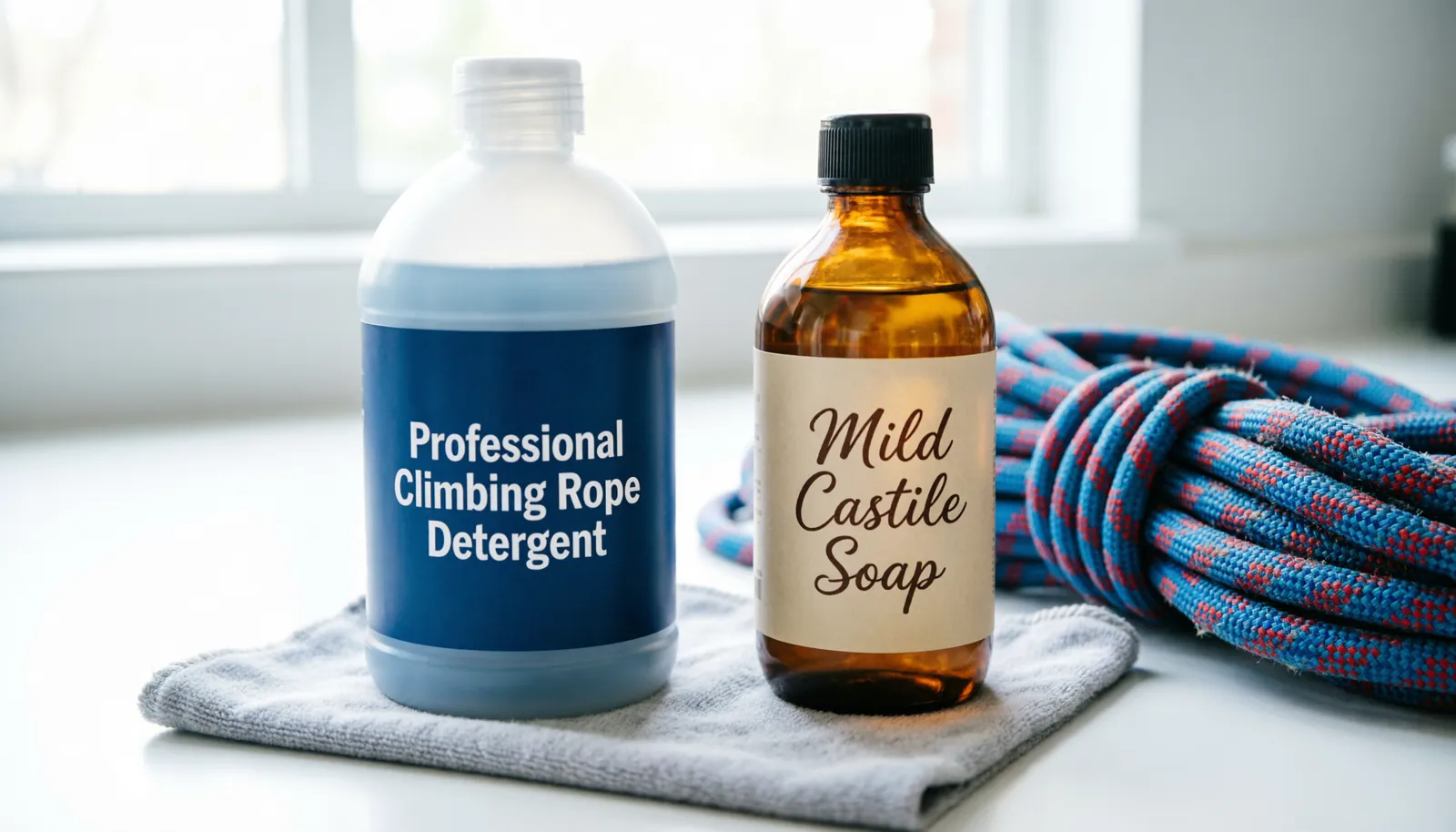
Climbers often argue over whether to buy expensive rope detergents or use basic household soap. The table below compares the two choices across common cleaning factors.
| Cleaning Agent | Cost Level | Cleaning Power | Chemical Safety | Residue Risk |
|---|---|---|---|---|
| Specialty Rope Wash | Premium | Moderate | Tested for Polyamide | Very Low |
| Pure Mild Soap (e.g., Castile) | Budget | Moderate | Safe if diluted | Low (requires extra rinse) |
| Standard Laundry Detergent | Budget | High | High risk (enzymes/bleach) | High |
| Plain Cold Water | Free | Light | 100% Safe | Zero |
Pure liquid castile soap works great and costs far less than specialty climbing cleaners. However, if your rope picked up heavy grease or chain oil at an outdoor crag, a dedicated manufacturer wash dissolves grime more reliably without relying on damaging industrial solvents; check your owner’s manual for specific maintenance frequency based on your usage.
What Washing Can and Can’t Do
Washing removes surface chalk, mud, and embedded quartz dust from the sheath. It restores suppleness, making a stiff cord soft and easy to knot again.
However, washing can’t fix physical wear, flatten sheath fuzz, or restore lost elasticity after heavy fall cycles. It won’t repair flat spots or mend core strands damaged by sharp rock edges. Marketing claims that washing “revitalizes” the rope mean handling comfort, not the structural impact rating certified by test labs.
A simple test determines if your rope is beyond hope: run your fingers along the entire length. If you feel a soft, mushy section, the core is crushed. This damage is permanent. Washing won’t re-expand the fibers.
Every climber’s retirement point varies based on crag environment and pitch counts, which you can read directly from your personal rope logbook. If your sheath is merely stiff, wash it. If the core is compromised or the sheath is frayed to the yarns, retire it immediately. Never gamble on a rope that shows structural fatigue.
When to Retire It and When to Call a Pro
Washing is a maintenance job, but inspecting for retirement is a life-safety task. Don’t treat retirement checks lightly.
Retire your cord immediately if you see any white core fibers showing through the colored sheath. Sheath slippage, stiff core sections, chemical exposure from battery acid, or deep burns from rapid lowering also require instant retirement. Petzl and Mammut manuals recommend retiring synthetic ropes after a maximum lifespan of 10 years from the date of manufacture, regardless of usage.
This routine cleaning guide isn’t for damaged gear, and it won’t teach you how to assess high-impact factor-two falls. Evaluating complex load histories and rigging systems requires hands-on training from an AMGA or PCIA certified climbing instructor, not an online article.
Step-by-Step Washing, Drying, and Storage
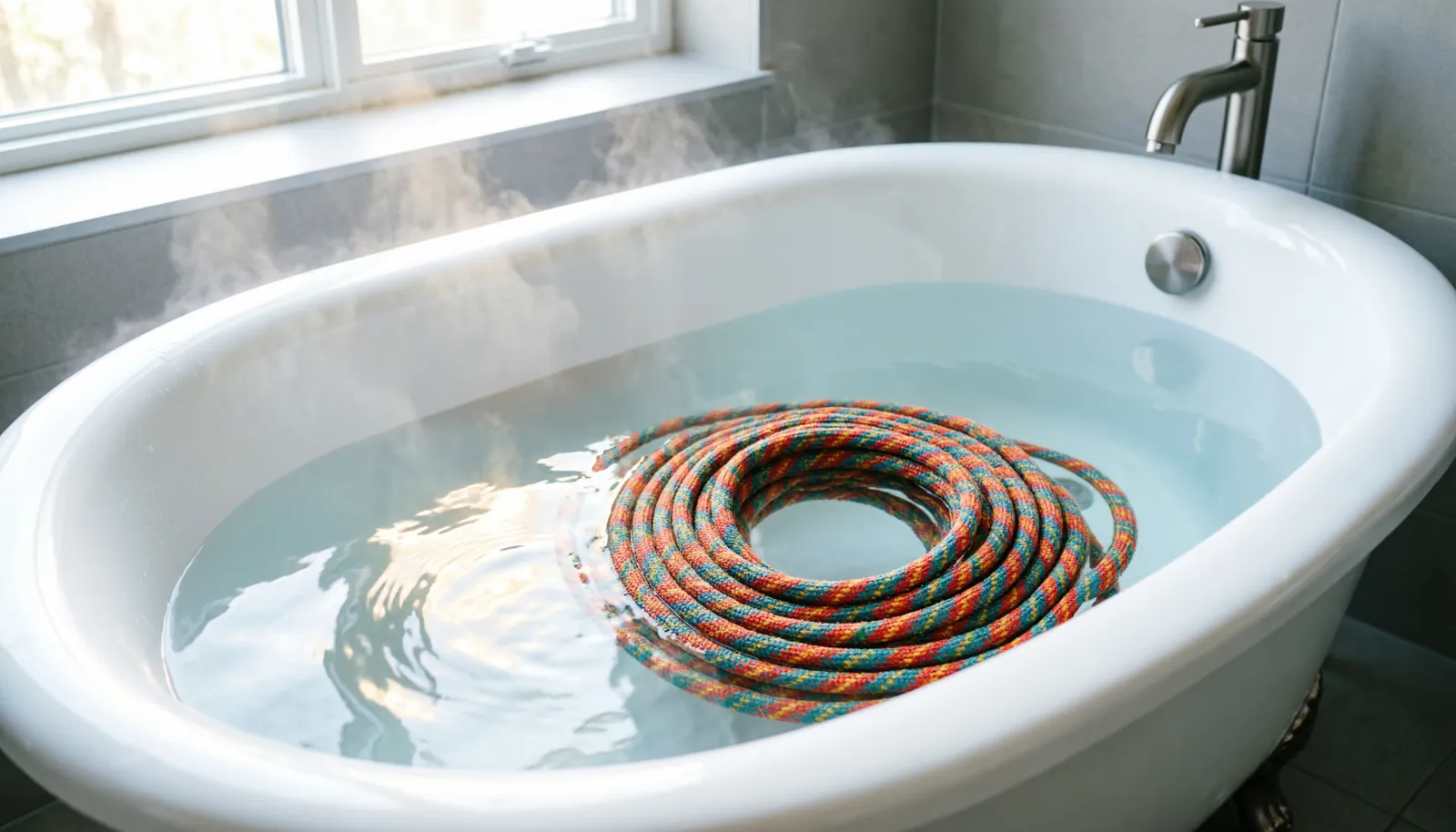
Follow these practical steps to clean, dry, and store your line without damaging the nylon material.
- Flake the rope into loose coils: Uncoil your cord loosely to eliminate any existing kinks or twists.
- Fill the tub: Run cold or lukewarm water (never above 86°F / 30°C) into a clean tub. Add two capfuls of mild soap or rope detergent.
- Submerge and soak: Push the cord under the water and let it soak for 20 to 30 minutes to soften dried mud and crag dirt.
- Scrub with a rope brush: Run the line through a spiral rope brush or a soft cotton towel to loosen embedded grit.
- Rinse thoroughly: Drain the soapy water and refill with clean, cold water. Slosh the line until all soap residue vanishes.
- Air dry away from heat: Flake the wet rope onto a clean towel on the floor in a dark, well-ventilated room.
- Store properly: Once completely dry, store the line uncoiled inside a breathable rope bag in a cool, dry closet.
A common mistake is hanging wet gear over a radiator or outside in direct sunlight to speed up drying. This ruins the rope: heat weakens nylon, and ultraviolet sunlight breaks down synthetic fibers quickly, leaving you with permanent core damage.
Related guides
Frequently Asked Questions
Can I wash my climbing rope in a washing machine?
Yes, but only in a front-loading machine without a center agitator. Put the rope into a daisy chain first, place it inside a mesh laundry bag, and run a gentle cold-water cycle without spin drying.
How often should I wash my rope?
Wash it whenever it feels stiff, turns your hands black with aluminum dust from belay devices, or after climbing in gritty, sandy areas. For regular gym and crag climbers, once or twice a year is typical.
Can I use regular laundry detergent?
No, don’t use conventional laundry detergents. They contain enzymes, brighteners, and bleaches that can chemically degrade nylon polymers. Use pure mild soap or a manufacturer-approved rope wash.
Can I dry my rope in a clothes dryer?
Never put your cord in a clothes dryer. The high heat melts and deforms the inner core filaments, completely destroying the rope’s safety rating.
Why does my rope feel stiff after washing?
Wet nylon shrinks slightly as it dries, which naturally tightens the sheath weave. Flaking it out and climbing on it once or twice restores normal handling quickly.
Can I hang my rope outside in the sun to dry?
No, keep it out of direct sunlight. Solar UV radiation degrades synthetic fibers over time, so always air-dry it indoors in a cool, well-ventilated room.
Does getting a dynamic rope wet ruin its strength?
Water temporarily reduces a dynamic rope’s shock absorption by roughly 20 to 30 percent while wet. Once the fibers dry out completely at room temperature, all original dynamic strength returns.
What is a daisy chain coil for washing?
A daisy chain is a series of loose slip knots tied along the rope to shorten it and prevent tangling in the washing machine.
The best way to protect your line is by using a ground tarp at the base of every climb to keep dirt out.
Never let clean rope maintenance distract you from regular tactile inspections. If the pinch test fails or you spot exposed core yarn, retire the cord immediately, because clean nylon can’t protect you if the structural fibers are broken.
Conclusion
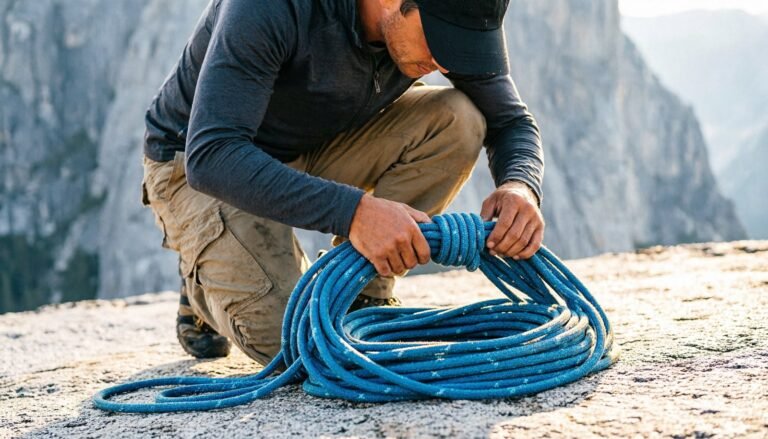
Once your rope is completely dry, take a moment to inspect the entire length for any fuzzy spots or flat sections. If it looks smooth and feels solid, you’re ready to head back to the crag. Don’t forget to coil it carefully so it doesn’t tangle when you’re finally at the base.
8 Comments