
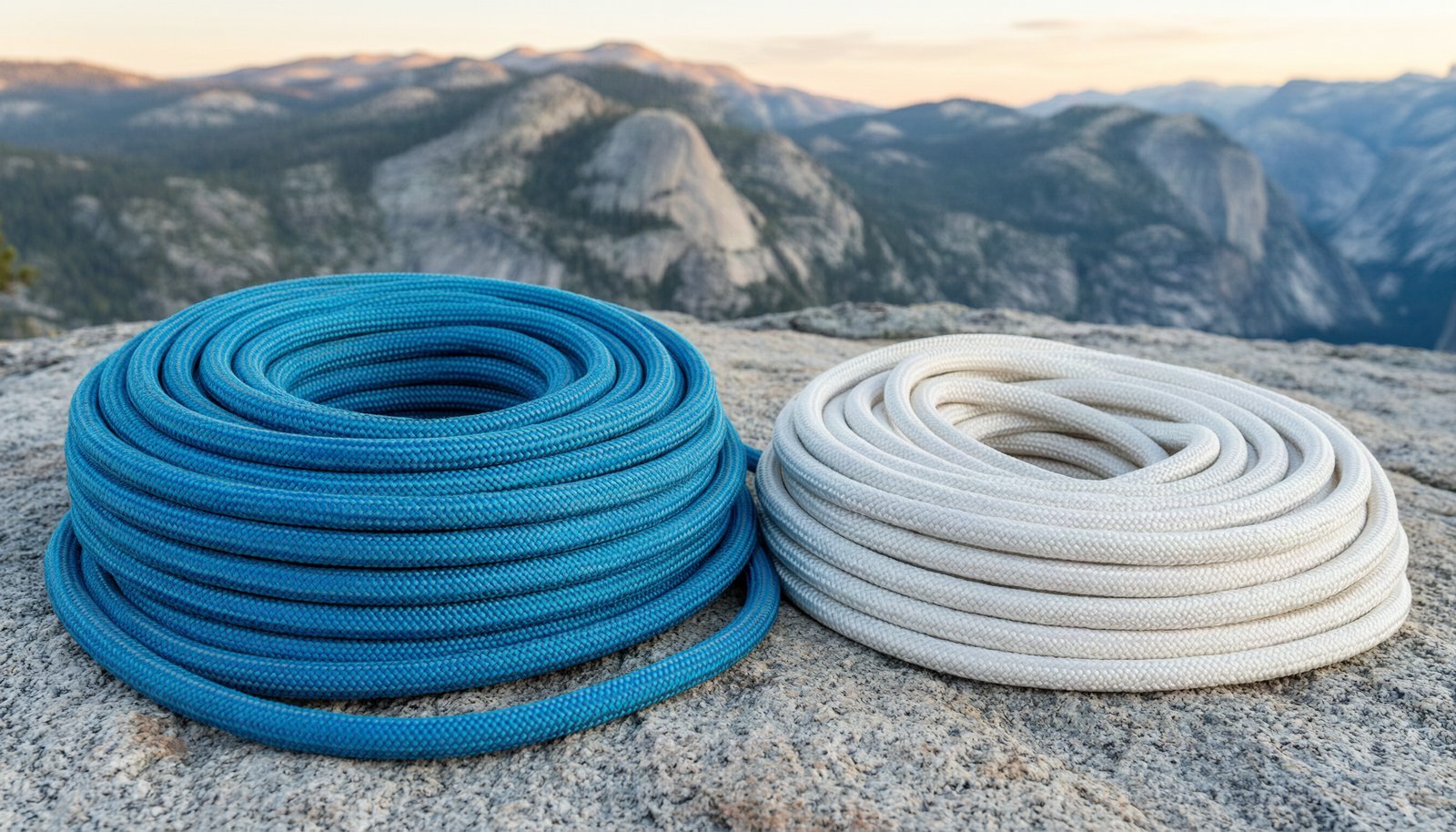
Dynamic vs Static Rope: How to Choose the Right Climbing Line
A dynamic rope stretches under load to catch falling climbers safely, while a static rope holds firm with minimal stretch to pull loads or control descents. Deciding on dynamic vs static rope comes down to whether a human body might fall onto the line from above an anchor.
Key Takeaways
- Dynamic vs Static Rope: Core Differences
- How Dynamic Ropes Absorb Fall Energy
- When to Use Static Ropes
- Safety Risks of Using the Wrong Rope Type
- Material Composition and Construction
- Maintenance and Retirement Standards
On this page
Recommended Products for Dynamic & Static Ropes






Dynamic vs Static Rope: Core Differences
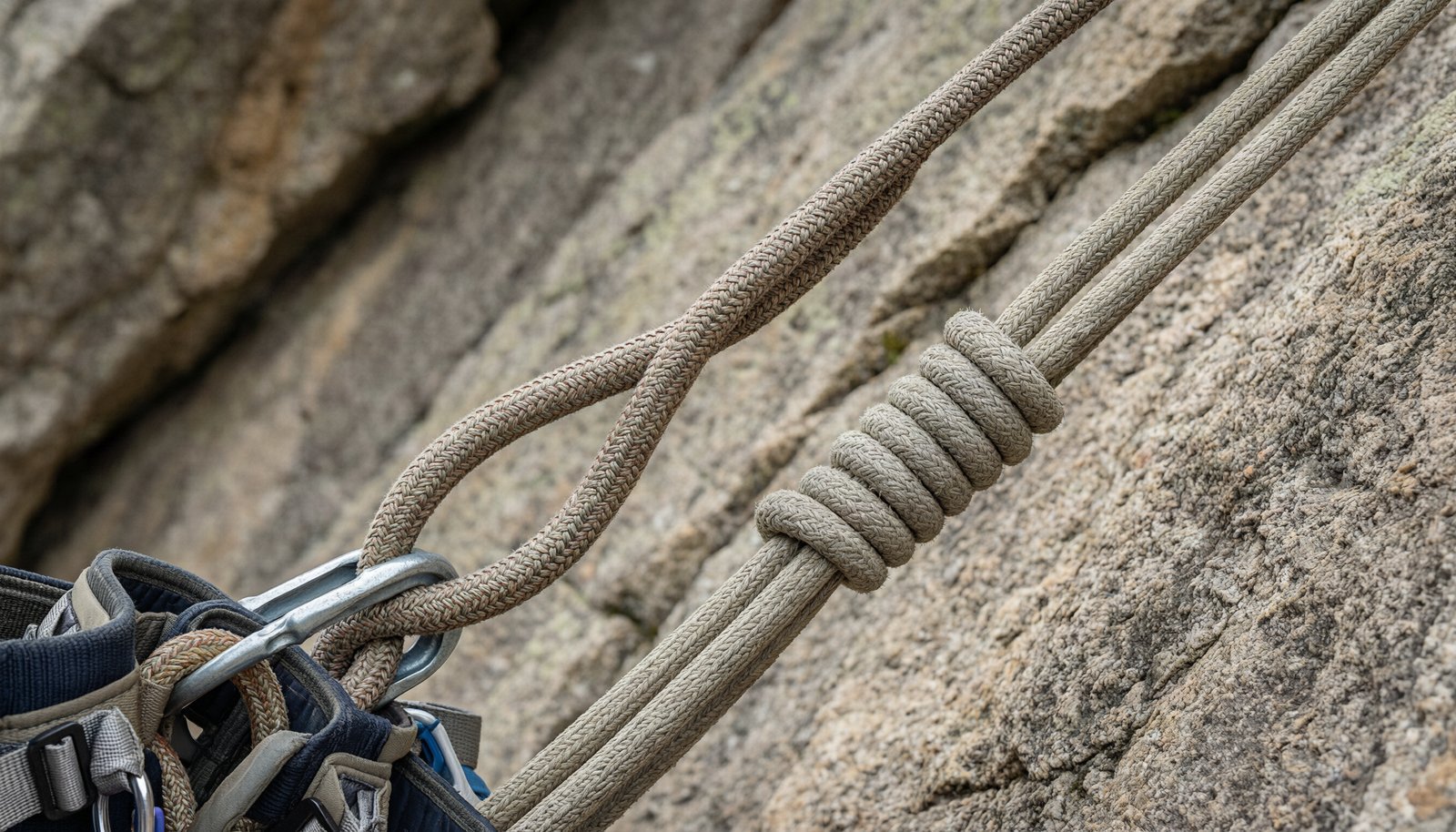
A dynamic rope acts like a rubber spring, but a static rope behaves more like a steel cable. When a climber falls onto gear, the rope must absorb that motion so the climber’s body doesn’t take the hit. In contrast, static lines keep movement predictable when you need steady positioning or heavy lifting.
| Feature | Dynamic Rope | Static Rope |
|---|---|---|
| Primary Stretch (Working Load) | Roughly 6% to 10% under body weight | Less than 5% under body weight |
| Maximum Stretch (Fall Load) | Up to 35% or 40% during a hard fall | Roughly 10% or less in a severe shock |
| Best Purpose | Lead climbing, gym climbing, mountaineering | Rappelling, hauling bags, caving, rescue work |
| Standard Impact Force | Under 12 kN (usually 7.5 kN to 9 kN) | Not rated to catch free-fall lead impacts |
| Abrasion Resistance | Moderate to balance supple handling | High sheath density to resist sharp rock edges |
A trade-off exists between soft catches and physical effort. A dynamic rope makes falls painless, but bouncing on a stretchy line wastes huge amounts of energy when ascending with mechanical ascenders.
How Dynamic Ropes Absorb Fall Energy
Dynamic ropes convert the sudden force of a falling climber into controlled heat and extended movement. Inside the rope, the construction of the core and sheath allows the rope to elongate under tension, slowing the climber down over several feet instead of stopping them instantly.
The Role of Elongation in Lead Climbing
Lead climbing involves moving above your last piece of protection. If you slip, you fall past that piece, doubling the fall distance before the rope catches you.
A dynamic line elongates during this fall. This elongation cushions your organs, protects your spine, and prevents pieces of rock protection from ripping out of the stone. If an anchor sees a sudden jerk, the force can multiply beyond what the gear can hold. Dynamic stretch lowers that peak shock significantly.
Understanding Impact Force Ratings
Impact force describes the peak jolt transferred to the climber, harness, and anchor during an arrested fall. Standard testing measures this shock value in kilonewtons (kN). The international body UIAA climbing rope standards mandate that a single dynamic line must produce an impact force under 12 kN during its certification drop test. Most modern dynamic ropes run between 7.5 kN and 9.0 kN. A lower number means a softer fall on your bones and your anchors.
When to Use Static Ropes
Static ropes serve tasks where bounce is inefficient, annoying, or dangerous. They hold tight lines so workers and rescue teams can move across spans without sagging into hazards.
Applications in Rappelling and Canyoneering
When you drop down a cliff on rappel, a dynamic line creates an uncomfortable pogo-stick bounce. That repeated vertical bouncing saws the rope back and forth across sharp edges, which damages the outer sheath.
Canyoneers and cavers pick static ropes because the lack of stretch keeps descents smooth. If you need to lower yourself down a waterfall, a static rope gives you immediate control over your friction device. It doesn’t stretch out at the bottom of the pitch, keeping you above dangerous hydraulics.
Efficiency in Hauling and Rescue Systems
Hauling heavy gear up a multi-pitch wall requires pulling against resistance. If you haul a 100-pound bag on a dynamic rope, half of your pulling motion just stretches the fibers before the bag moves an inch.
Rescue teams use static ropes inside mechanical advantage pulley rigs. A rigid rope transfers 100% of the team’s effort directly into lifting the litter. It also stops the rescue load from dropping unexpectedly if a haul cam slips slightly while setting a progress capture.
Safety Risks of Using the Wrong Rope Type
Using a static rope for lead climbing creates an extreme risk of severe bodily trauma or gear failure. If a climber falls two feet above a bolt on a static rope, the sudden stop acts like hitting a concrete floor. Human internal organs tear under sudden deceleration spikes above 12 kN, and hip harnesses can cause massive pelvic fractures.
Using a dynamic rope for continuous rappelling or heavy hauling isn’t immediately fatal, but it costs you gear and effort. The mistake people actually make is top-rope soloing or jugging on a thin dynamic line without edge guards. The constant stretching across granite edges grinds through the protective sheath in just a few sessions, ruining an expensive rope that costs hundreds of dollars.
Here is the decision rule: if the user climbs above the anchor, choose dynamic; if the user remains strictly below the anchor or works on fixed lines, choose static.
Material Composition and Construction
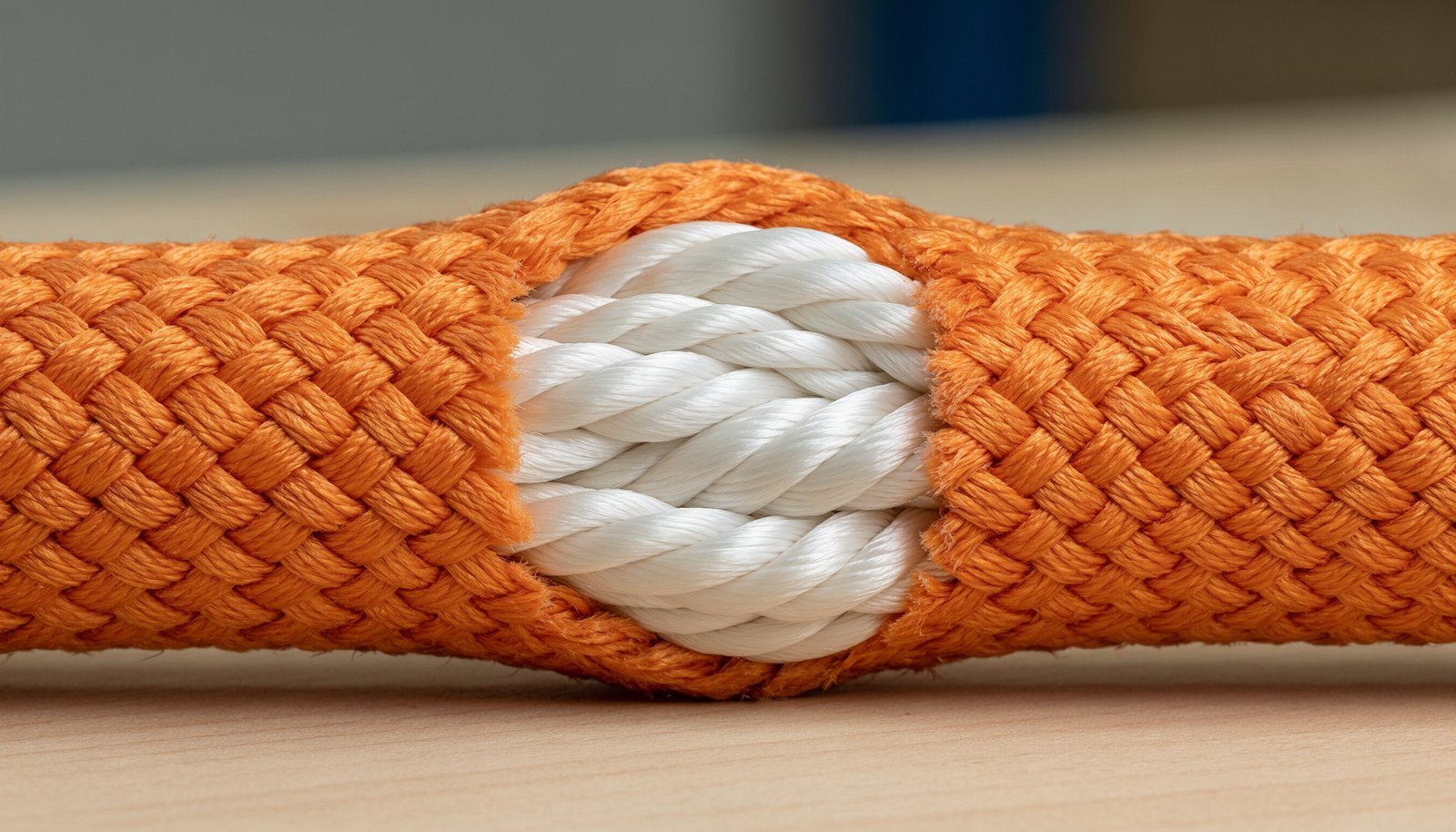
Both dynamic and static lines use a kernmantle design. This build features an interior core (kern) that carries the main tensile load, wrapped inside a woven exterior sheath (mantle) that resists dirt, sun, and friction.
The difference lies in how manufacturers treat the core nylon fibers. Dynamic ropes use twisted nylon 6 or nylon 6,6 yarns that act like tiny coiled springs. Static ropes use parallel or lightly twisted polyester or nylon fibers. Some specialized rescue lines add aramid cores to resist melting under high temperatures, but these have almost zero stretch.
Maintenance and Retirement Standards
Dirt acts like ground glass inside a rope, cutting the microscopic core fibers as they rub together. Wash dirty ropes by hand in a tub of clean, lukewarm water with mild soap. Never use harsh bleach or dry your rope in direct sunlight, because ultraviolet rays break down synthetic polymers quickly.
Retire any rope immediately if you notice: – A flat, soft, or squishy spot in the core when pinching the line into a bight. – Sheath wear that exposes the white core yarns underneath. – Discoloration from chemical spills, battery acid, or strong solvents. – A hard, stiff section caused by severe friction melting.
Check the manufacturer’s instructions to confirm the recommended maximum lifespan limits.
How to Identify Your Rope Type
Every certified climbing and rescue rope comes with identification marks to prevent dangerous mix-ups in your gear closet:
- Check the plastic end-caps or heat-shrink tape wrapped around the cut ends of the rope.
- Look for standard symbols: dynamic single ropes show a circle with the number “1”, half ropes show “1/2”, and twin ropes show an infinity symbol.
- Check for static markers: static and semi-static lines display labels referencing EN 1891 Type A or Type B standards.
- Test the elasticity by anchoring one end near the ground, clipping a short section, and sitting your weight onto it. A dynamic rope dips visibly, while a static rope holds firm.
Frequently Asked Questions
Can I use a dynamic rope for top-rope soloing?
You can, but it isn’t ideal. The stretch in a dynamic rope means that if you slip near the bottom of a climb, you might fall all the way to the ground before the rope catches you. Most solo climbers prefer a low-stretch or semi-static rope to eliminate this drop distance.
Do static ropes lose their strength over time?
Yes, all synthetic ropes lose strength as they age. Even if a static rope sits in a closet without use, time and environmental factors can slowly degrade the synthetic fibers. Most makers recommend retiring any rope after it ages significantly, even if it was never loaded.
Is it safe to use a static rope for a gym lead climb?
No, you must never lead climb on a static rope. A lead fall onto a static line doesn’t stretch to catch you, which can snap your protection, shatter carabiners, and cause fatal internal injuries to your body. Gyms will immediately stop you if you pull out a static line on a lead wall.
How do I store my rope to prevent degradation?
Store your rope uncoiled in a breathable bag or loose mesh duffel in a cool, dark, dry closet. Keeping the rope away from direct sunlight, chemicals, and damp environments prevents UV rays and moisture from damaging the nylon fibers. This simple storage method ensures your rope remains reliable for future use.
Final Thoughts
Before you head out to the crag or the job site, double-check your gear labels to ensure you’ve got the right tool for the task. It’s always worth asking an experienced partner to verify your setup. You’ll feel much more confident knowing your rope won’t let you down when things get serious.




7 Comments