
10 Best Climbing Chalks (2026): Grip That Actually Lasts
Looking for the best climbing chalk? We read the real buyer reviews and the manufacturer specs so you do not have to, then distilled them into 10 honest picks — loose, block, liquid, and chalk balls for sweaty hands, long sessions, and low-residue gyms.
Key Takeaways
- Best overall: FrictionLabs Premium — the blend that lasts longest and clouds the air least.
- Best value: Black Diamond White Gold — the pure, affordable gym standard.
- Sweaty hands? A drying blend or a liquid (Mammut, Secret Stuff) beats simply dipping more.
- Gym rules: many bouldering gyms ban loose chalk — a liquid or a chalk ball keeps you compliant.
Best Climbing Chalk at a Glance
| # | Product | Best For | Standout | Score | |
|---|---|---|---|---|---|
| 1 | FrictionLabs Premium Loose Climbing Chalk | Overall | Lowest dust, lasts | 9.4 | Check Price → |
| 2 | Black Diamond White Gold Chalk | Value | Pure & cheapest | 9.1 | Check Price → |
| 3 | FrictionLabs Magic Chalk Ball | Chalk Ball | Refillable ball | 8.9 | Check Price → |
| 4 | Mammut Liquid Chalk 200ml | Liquid Chalk | No-dust base layer | 8.8 | Check Price → |
| 5 | Metolius Super Chalk | for Gyms & Bulk | Bulk value | 8.7 | Check Price → |
| 6 | FrictionLabs Secret Stuff Liquid Chalk | for Sweaty Hands | Sweat-proof liquid | 8.6 | Check Price → |
| 7 | Joshua Tree Scented Herbal Loose Chalk | for Skin | Skin-friendly | 8.5 | Check Price → |
| 8 | SPRI Chalk Block & Chalk Ball | Starter Set | Block + ball | 8.4 | Check Price → |
| 9 | Primo Chalk Resealable Bucket | Additive-Free | Additive-free | 8.3 | Check Price → |
| 10 | RUNGNE Premium Climbing Chalk | Budget | Budget all-rounder | 8.1 | Check Price → |
The 10 Best Climbing Chalks, Reviewed

FrictionLabs Premium Loose Climbing Chalk
FrictionLabs mills its chalk to a consistent blend of coarse and fine magnesium carbonate, so it feeds grip onto your skin and clings to your fingertips longer than bargain gym chalk. Heavy sweaters report far fewer re-chalks, and the lower dust is a real perk in a packed gym. It costs more per ounce, but you use less of it.
Pros
- Stays on skin longer
- Much less airborne dust
- Great for sweaty hands
Cons
- Premium price per ounce
- Overkill for dry hands
Skip it if: your hands stay dry and you climb short gym sessions — a basic loose chalk does the job for less.
Check Price on Amazon →
Black Diamond White Gold Chalk
The chalk most climbers grew up on: 100% magnesium carbonate, no fillers, and it works for the widest range of hands. It is dustier and disappears faster than a premium blend, but at this price topping up your bag never stings.
Pros
- Excellent price per gram
- Pure, no additives
- Available everywhere
Cons
- Fairly dusty
- Needs frequent re-chalking
Skip it if: you climb in a chalk-restricted gym — go with a liquid instead.
Check Price on Amazon →
FrictionLabs Magic Chalk Ball
A refillable ball filled with FrictionLabs premium blend, so you get the brand grip with far less dust and waste. Squeeze it for an even coat and refill from a tub when it runs low. Ideal for gyms that tolerate balls but not loose clouds.
Pros
- Premium chalk, low mess
- Refillable
- Even coverage
Cons
- Less coverage than loose
- Pricier than a basic ball
Skip it if: you like burying your hands in loose chalk between moves.
Check Price on Amazon →
Mammut Liquid Chalk 200ml
Mammut alcohol-based liquid dries to a thin, grippy base layer with essentially no airborne dust — the format many bouldering gyms actually allow. One coat lasts through long sections, and it layers well under loose chalk when the rules permit.
Pros
- Almost no dust
- Long-lasting base layer
- Gym-compliant
Cons
- Alcohol can dry skin
- Harder to reapply mid-route
Skip it if: you prefer dipping into a chalk bag constantly.
Check Price on Amazon →
Metolius Super Chalk (2.5 Gallon Bucket)
Metolius adds a light drying agent to magnesium carbonate, and this 2.5-gallon bucket is the cheapest way to keep a home wall or a group stocked for a season. Refill your bags and balls from it; the drying agent helps on humid days.
Pros
- Huge value in bulk
- Added drying agent
- Perfect for refills
Cons
- Too much for one climber
- Drying agent is not for every skin
Skip it if: you just need a single pocket-sized bag.

FrictionLabs Secret Stuff Liquid Chalk
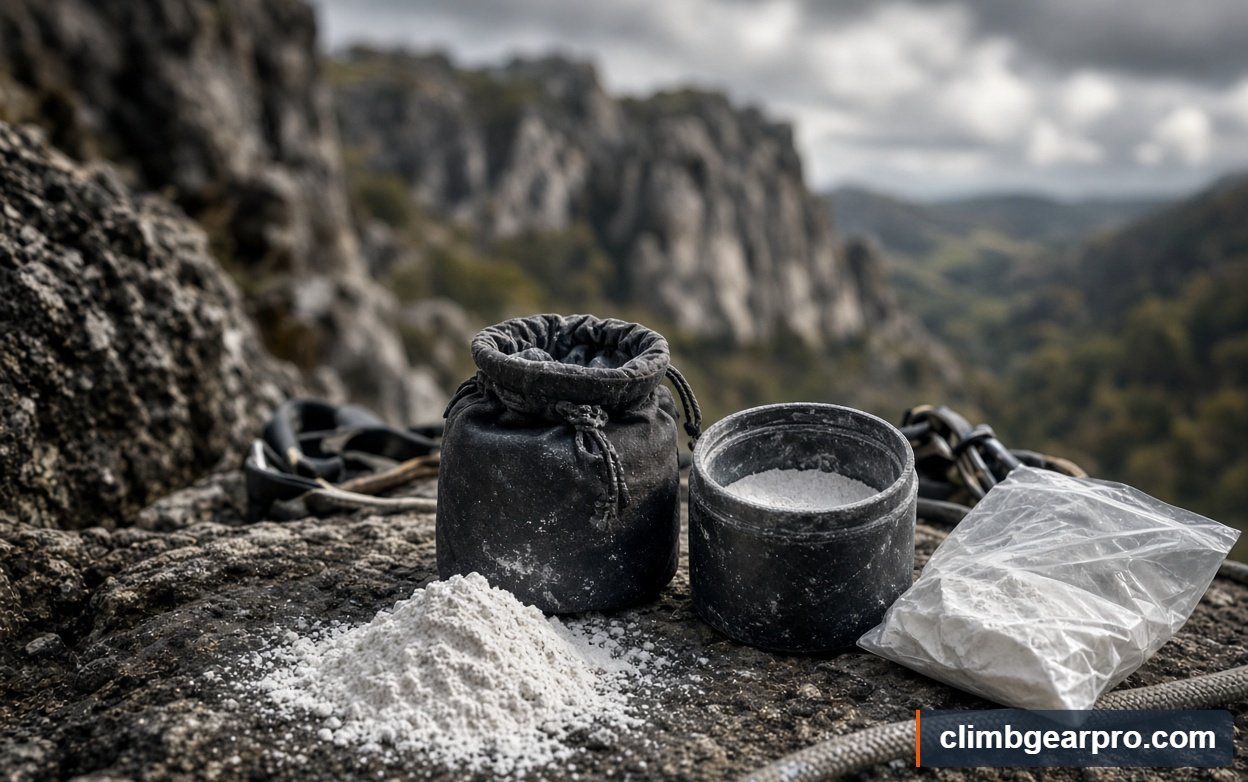
Secret Stuff is FrictionLabs liquid chalk — a quick-drying grip layer that holds up on sweaty, humid days far longer than a dip of loose chalk. Use it as a base and top with loose chalk, or on its own where loose chalk is banned.
Pros
- Excellent for high sweat
- Very low dust
- Trusted brand
Cons
- Premium price
- Can dry skin over time
Skip it if: your hands rarely sweat and you climb indoors.
Check Price on Amazon →
Joshua Tree Scented Herbal Loose Chalk
Joshua Tree blends skin-conditioning herbs into its loose chalk to reduce the cracking and dryness that plague frequent climbers. The light scent is pleasant, and sensitive-skinned users say it feels gentler over long sessions than pure chalk.
Pros
- Gentler on skin
- Light natural scent
- Still grips well
Cons
- Pricier than plain chalk
- Scent is not for everyone
Skip it if: you want the driest possible hands and do not mind basic chalk.
Check Price on Amazon →
SPRI Chalk Block & Chalk Ball
SPRI inexpensive block-plus-ball combo is a low-commitment way to learn what you like — crush the block into a bag, or use the ready-made ball for low mess. Fine for gym sessions and first outdoor trips before you invest in a premium blend.
Pros
- Cheap and versatile
- Block + ball included
- Low-mess option
Cons
- Basic quality
- Not as refined as premium chalk
Skip it if: you already know you want a specific premium blend.
Check Price on Amazon →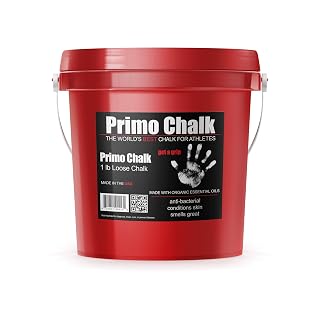
Primo Chalk Resealable Bucket
Primo markets a cleaner magnesium carbonate with added essential oils and no heavy drying agents, pitched at climbers who dislike how harsh some chalks feel. The resealable bucket keeps it fresh and easy to refill from.
Pros
- Cleaner formula
- Resealable bucket
- Gentle on hands
Cons
- Niche brand
- Grip is good, not elite
Skip it if: you want maximum grip on hard, sweaty redpoints.
Check Price on Amazon →
RUNGNE Premium Climbing Chalk
RUNGNE is a popular budget pick: a chunky-to-fine loose chalk that grips well enough for gym and beginner outdoor use at a fraction of premium prices. It is dustier and less consistent than the big names, but hard to argue with the value.
Pros
- Very affordable
- Decent chunky texture
- Thousands of good reviews
Cons
- Dustier than premium
- Less consistent batches
Skip it if: you sweat heavily or want the lowest-dust option.
Check Price on Amazon →How We Chose These Chalks
We started from what climbers actually buy and re-buy, then cross-checked manufacturer specs against thousands of verified reviews. We weighted four things: how long one application lasts, how much airborne dust it creates, how it performs for sweaty versus dry hands, and value per gram. Chalk is a consumable, so a bag that lasts twice as long at 1.5x the price is a genuine bargain — and we scored it that way.
What Climbing Chalk Does (and Doesn\’t Do)
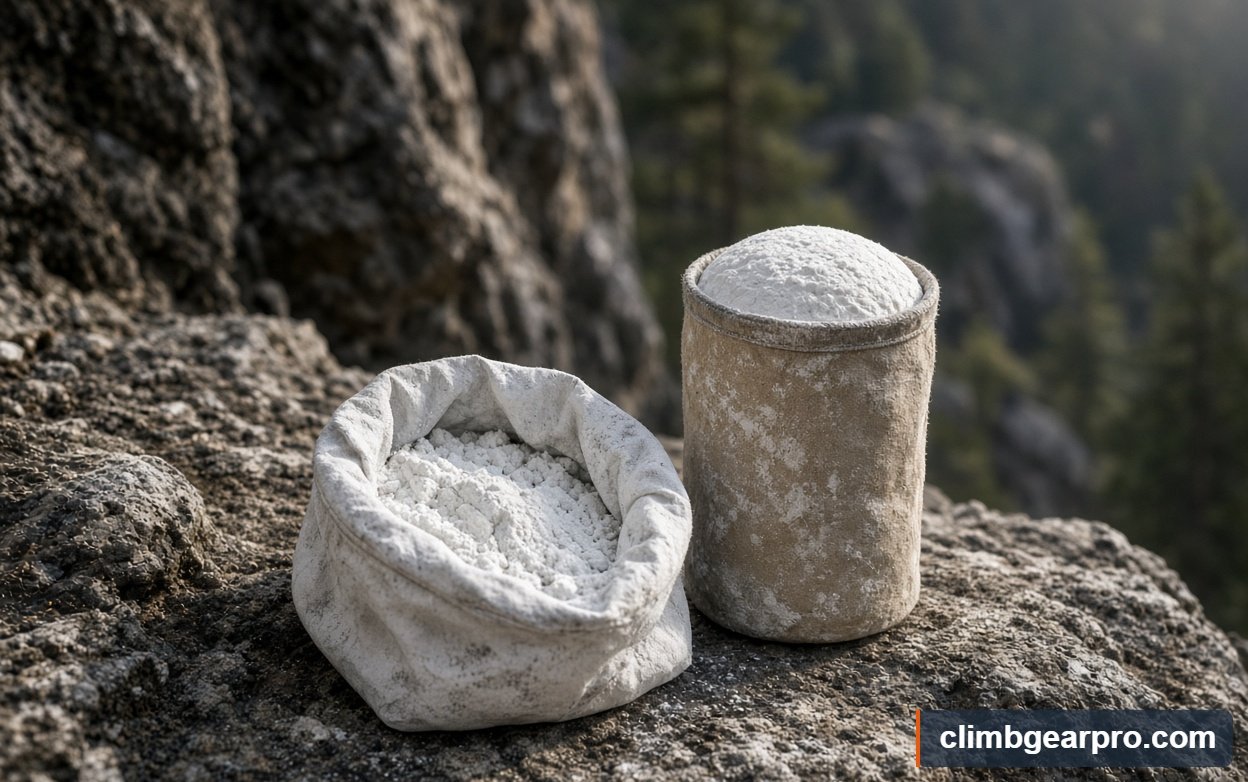
Chalk is mostly magnesium carbonate. Its job is to absorb sweat and oil so your skin makes firmer contact with the rock or hold. That is the whole mechanism. It does not make a hold chemically stickier, and it will not rescue bad footwork or a pump. If your hands are dry, more chalk past a thin, even coat just clouds the air.
Types of Climbing Chalk Compared
| Type | Best For | Trade-off |
|---|---|---|
| Loose chalk | Maximum grip, re-applying mid-route | Dusty; banned in some gyms |
| Block chalk | Lowest cost per gram, travel | You crush it yourself |
| Liquid chalk | Chalk-ban gyms, long-lasting base | Alcohol can dry skin |
| Chalk ball | Low mess, shared bags, kids | Less coverage than loose |
How to Choose the Best Climbing Chalk for Your Hands
The best climbing chalk for you comes down to two questions: how much do your hands sweat, and where do you climb? If you sweat heavily or climb in humidity, pay for a coarse blend or a chalk with a drying agent — you will re-chalk far less. If your skin is dry or cracks easily, avoid added drying agents and stick to pure magnesium carbonate or a skin-friendly blend. And always check your gym policy before buying loose chalk, because a liquid or a chalk ball may be the only option allowed.
What to Avoid When Buying Chalk
Skip performance chalks that hide their ingredients behind marketing — good chalk lists pure magnesium carbonate or clearly names its drying agent. Be wary of the cheapest bulk gym chalk if you have sensitive skin, since the fines can be harsh and dusty. And do not buy a scented chalk expecting it to grip differently; the fragrance is for your nose, not your fingers.
How to Use Climbing Chalk the Right Way
- Start with clean, dry hands — wipe off sweat before your first dip.
- Apply a thin, even coat and rub it in; you want coverage, not a cake.
- Blow or shake off the excess so you are not just chalking the holds.
- Re-chalk only when your hands feel damp again, not out of habit.
- If your gym bans loose chalk, lay down a liquid base first, then top up if allowed.
Dos and Don\’ts
Do
- Match chalk type to how much your hands sweat
- Check your gym loose-chalk policy first
- Use a chalk ball to cut dust and waste
- Wash and moisturize hands after sessions
Don\’t
- Assume more chalk fixes slick holds
- Buy drying blends if your skin cracks
- Bring loose chalk to a ban-only gym
- Ignore the fine print on “pure” claims
Honest Limits
No chalk will fix greasy holds, humidity in a packed gym, or the pump at the end of a route. A premium blend buys you fewer re-chalks and less dust — real benefits — but the jump from a cheap bag to a premium one is smaller than the jump from no chalk to any chalk. If you are new, start cheap, learn what your hands need, then upgrade with a reason.
Frequently Asked Questions
Is liquid or loose chalk better?
Loose chalk grips best and lets you re-apply mid-route; liquid chalk lasts longer per application, makes almost no dust, and is the only option in chalk-restricted gyms. Many climbers use a liquid base layer plus loose chalk on top.
Does expensive chalk actually work better?
For dry hands, barely. For sweaty hands or long sessions, a premium blend genuinely means fewer re-chalks and less dust — that is what you are paying for.
Is climbing chalk the same as gym (lifting) chalk?
Chemically, yes — both are magnesium carbonate. Climbing chalk is usually milled to a texture climbers prefer and sold in forms (balls, blocks, fine blends) suited to the wall.
How do I stop chalk from drying out my skin?
Choose pure or skin-friendly chalk over a heavy drying blend, chalk less often, and moisturize after climbing. If your fingertips split, a repair balm overnight makes a big difference.
Can I use the same chalk indoors and outdoors?
Yes. Many climbers carry a liquid or chalk ball for humid gym sessions and a coarse loose chalk for dry rock, but a good all-rounder like FrictionLabs Premium covers both.
The Bottom Line
For most climbers, FrictionLabs Premium is the best climbing chalk overall — it lasts longer and clouds the air less than anything at the gym counter. On a budget, Black Diamond White Gold is still hard to beat, and if your hands pour sweat, a liquid like Mammut or Secret Stuff will do more than simply dipping more often. Buy for your hands and your gym rules, and the right chalk becomes one less thing you think about on the wall.
4 Comments