When to Retire a Climbing Helmet: Age, Damage, and Wear Signs
A climbing helmet doesn’t last forever, even if it looks perfect. The honest answer: retire it after a number of years from the date of manufacture, or sooner if it’s taken a hard hit, shows cracks, or the straps and foam have gone soft. That’s the guidance most makers and safety bodies work from, and it’s the one to plan around.
Here’s the problem. Helmets don’t fail the way people expect. A scratched shell or a faded color means nothing. What kills a helmet is invisible: the foam liner inside slowly stops absorbing energy, and the plastic shell gets brittle with age, sunlight, and heat. You can’t see any of that from the outside.
Most guides get one thing backwards. They tell you to replace a helmet after any drop or bang, even a small one. The truth is more useful than that. A helmet that fell off your pack onto grass is fine. A helmet that took a real impact — a rock, a fall, a hard strike — is done, because the foam has already crushed and won’t crush again.
This article covers what a helmet really is, the types you’ll choose between, a one-minute test, the limits nobody advertises, when to retire it and when to see a pro, plus care and storage. It ends with the questions people ask most.
Key Takeaways
- What a Climbing Helmet Is and How It Works: A climbing helmet is a shell plus a liner. The hard outer shell spreads the force of a hit across a wide area.
- Types of Climbing Helmets and How to Choose: There are three broad types, and the choice comes down to weight, durability, and what you’re climbing.
- A One-Minute Helmet Check: Do this before every season, and any time the helmet’s been in a pack or taken a knock.
- Dynamic vs. Static Helmets, and Other Confusions: People mix up a few things about helmets. The biggest one is impact type, but fit and standard also get confused.
- What a Helmet Can’t Do: A helmet reduces your risk. It doesn’t remove it. No helmet stops every injury, and none is designed for a huge fall onto your head.
- When to Retire It, and When to See a Pro: Retire a climbing helmet if the foam is cracked or crumbling, the shell is cracked or flexes easily, the straps are frayed or won’t hold, or the shell has taken a hard impact.
Recommended Products for Climbing Helmets


What a Climbing Helmet Is and How It Works
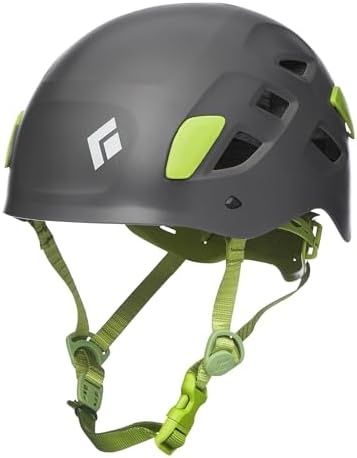
A climbing helmet is a shell plus a liner. The hard outer shell spreads the force of a hit across a wide area. The foam liner underneath crushes on impact, and that crushing is what soaks up the energy before it reaches your skull. Once the foam crushes, it can’t come back.
Two standards matter for climbing and mountaineering helmets. EN 12492 is the European standard, and UIAA 106 is the international one from the UIAA, the body that governs climbing worldwide.
A helmet marked with either has passed tests for impact from above, from the front, and from the side, plus a penetration test where a sharp point is dropped on it. Buy a helmet with one of those marks. A bike helmet or a hard hat isn’t tested the same way and isn’t a substitute.
The key terms you’ll see:
- Shell — the outer layer, usually plastic or a plastic composite. Protects against punctures.
- Liner — the foam inside (often EPS or EPP). Absorbs the energy of a hit.
- Cradle or suspension — the straps that hold the helmet off your head or snug to it.
- Chin strap — keeps it on. A loose strap means the helmet can slide off in a fall.
One thing to know: foam ages. Over years, heat, sweat, and UV light break it down, and it loses its ability to absorb energy even if it never gets hit.
Types of Climbing Helmets and How to Choose
There are three broad types, and the choice comes down to weight, durability, and what you’re climbing. A hard-shell helmet is the toughest and cheapest, but it’s heavy and hot. A foam or in-mold helmet is light and well-ventilated, but the foam can crack if you sit on it or stuff it in a pack. A hybrid mixes a thin hard shell over foam, giving you most of the protection at a mid weight.
Here’s the honest trade-off. For most sport climbing, gym climbing, and easy trad, a light foam helmet is perfectly fine. You don’t need to spend more. The expensive hybrid models matter when you’re doing alpine routes, ice climbing, or anything where the helmet gets knocked around a lot and you need it to survive the abuse.
If you climb mostly indoors and outdoors on rock, get a light foam or hybrid helmet and replace it when it ages out. If you climb ice or alpine, pay for a hard shell or a tough hybrid — the extra money buys durability, not more safety on a single hit.
Weight matters more than people admit. A heavy helmet you leave in the car doesn’t protect you. If the light one fits well and you’ll actually wear it, that’s the better buy. Fit beats specs every time.
A One-Minute Helmet Check
Do this before every season, and any time the helmet’s been in a pack or taken a knock. It takes under a minute and tells you whether to keep it or replace it.
- Squeeze the shell. Press the sides of the helmet gently with both hands. You should feel firm resistance. If it flexes easily or feels soft and chalky, the plastic has aged.
- Look inside the foam. Check the liner for cracks, crumbling, or a powdery feel. Crushed or cracked foam means it’s done.
- Check the straps. Pull the chin strap and the cradle. Look for fraying, stretched elastic, or a buckle that won’t hold. A strap that slips means the helmet can come off.
- Find the date. Look for a sticker or stamp inside with the manufacture date. That date, not the day you bought it, starts the clock.
If all four pass, the helmet’s still good. If any one fails, replace it. A cheap new helmet protects you better than an expensive old one.
Dynamic vs. Static Helmets, and Other Confusions
People mix up a few things about helmets. The biggest one is impact type, but fit and standard also get confused. Here’s a clear comparison.
| Feature | Hard-shell helmet | Foam / in-mold helmet |
|---|---|---|
| Weight | Heavier | Lighter |
| Ventilation | Less airflow | More airflow |
| Durability | Survives knocks | Foam cracks under abuse |
| Cost | Usually cheaper | Usually more expensive |
| Best for | Ice, alpine, rough use | Sport, gym, easy trad |
| Impact protection | Good | Good (if intact) |
The other common mix-up is the standard. A helmet tested to EN 12492 or UIAA 106 is built for climbing. A bike helmet (EN 1078) or a ski helmet (EN 1077) is tested for different impacts and isn’t a climbing helmet, even if it looks similar.
Which to choose? If you climb rock and want something light you’ll actually wear, pick a foam or hybrid helmet. If you climb ice, alpine, or mix in a lot of rough terrain, pick a hard shell. When in doubt, buy the one that fits your head best — a helmet that shifts on impact won’t protect you no matter how tough the shell is.
What a Helmet Can’t Do
A helmet reduces your risk. It doesn’t remove it. No helmet stops every injury, and none is designed for a huge fall onto your head. The standards test a specific drop onto a fixed anvil, not a real-world fall onto a sharp rock at speed.
Marketing overreaches here. Brands show off fancy ventilation, magnetic buckles, and “advanced” foam, and imply those features make you safer. Mostly they make the helmet lighter or more comfortable. That’s worth paying for if it means you wear it, but it isn’t extra protection.
The evidence is also thin on one point. There’s no reliable way to test a used helmet’s remaining life at home. You can’t measure how much energy the foam will still absorb. That’s why the date and the visual check matter so much — they’re the best tools you have. When a helmet’s age is unknown and you can’t find a date, treat it as old and replace it.
One more limit: a helmet protects your head, not your neck or your face. It won’t save you from a bad fall. It just lowers the odds of a serious head injury.
When to Retire It, and When to See a Pro
Retire a climbing helmet if the foam is cracked or crumbling, the shell is cracked or flexes easily, the straps are frayed or won’t hold, or the shell has taken a hard impact. Also retire it by age: most makers advise replacing a helmet a set number of years after the manufacture date, and some say sooner with heavy use. Check the maker’s own guidance for your model — Petzl, for example, publishes its own lifespan advice for each helmet.
The red flags to watch for:
- Cracks, dents, or a chalky, brittle feel in the shell
- Crushed, cracked, or powdery foam inside
- Frayed, stretched, or slipping straps and buckles
- A hard impact of any kind — a rock strike, a fall, a hard drop onto rock
- No visible manufacture date, or a date older than the maker’s limit
For anything beyond a visual check, go to a certified instructor or guide, or contact the manufacturer. If you’re unsure whether a helmet is still safe after a fall, don’t guess — replace it. A helmet is one of the cheapest pieces of climbing gear, and your head isn’t the place to save money.
How to Use and Care for Your Helmet
Treat your helmet like the safety gear it is. Store it out of direct sunlight and away from heat — a hot car or a sunny windowsill speeds up foam aging. Keep it away from gas, solvents, and strong chemicals, which can damage the shell and straps.
Don’t sit on it, don’t stuff heavy gear on top of it in your pack, and don’t use it as a bucket or a step. Foam helmets crack under that kind of pressure. Hang it or pack it on the outside where nothing presses on it.
Clean it with mild soap and water, then let it air-dry away from heat. Don’t use solvents or harsh cleaners. Check the straps and buckles each season and replace any part that’s worn — a new chin strap is cheaper than a new helmet, and some makers sell spares.
Finally, if there’s no clear stamp, contact the manufacturer to establish the helmet’s age — the manufacture date, not the purchase date, is what starts the clock. For more on helmet standards and testing, the UIAA safety standards page explains what the marks mean.
Related guides
- How to Wash a Climbing Rope Safely to Extend Its Lifespan
- Dynamic vs Static Rope: How to Choose the Right Climbing Line
FAQ
How often should I replace a climbing helmet?
Plan on 5 to 10 years from the manufacture date, whichever the maker advises for your model. Replace it sooner after any hard impact, or if the foam, shell, or straps show damage. The date inside the helmet is what counts, not the day you bought it.
Can I still use a helmet after a small drop?
A drop onto grass or a soft surface usually does no harm. A drop onto rock, or any impact that hits the shell hard, can crush the foam. If you’re not sure, replace it — you can’t see foam damage from the outside.
Does a scratched helmet need replacing?
No. Scratches on the shell are cosmetic and don’t affect protection. Replace it for cracks, soft or brittle plastic, or damaged foam and straps, not for scuffs.
Can I use a bike helmet for climbing?
No. Bike helmets are tested to a different standard (EN 1078) and aren’t built for the impacts climbing helmets face. Use a helmet marked EN 12492 or UIAA 106.
How do I find my helmet’s age?
Look for a sticker or stamp inside the shell with the manufacture date. If there’s no date, and you can’t confirm when it was made, treat it as old and replace it.
Is a more expensive helmet safer?
Not automatically. Price usually buys lighter weight, better ventilation, or a tougher shell for rough use. A cheap helmet that fits and is in good condition protects you as well as an expensive one.
Can I wash my climbing helmet?
Yes, with mild soap and warm water. Rinse it, then air-dry away from heat. Don’t use solvents or strong cleaners, which can weaken the shell and straps.
What do I do if my helmet takes a big hit?
Retire it. Once the foam has crushed, the helmet won’t absorb another impact the same way. Replace it before your next climb.
Does sunlight damage a helmet?
Yes. UV light and heat break down the foam and plastic over time. Store your helmet out of direct sun and away from hot places like a car dashboard.
Should I replace the straps or the whole helmet?
If only the straps or buckles are worn and the shell and foam are fine, replace the straps — some makers sell spares. If the foam or shell is damaged, replace the whole helmet.
The Bottom Line
The decision comes down to two things: age and condition. If your helmet is relatively new, has no cracks, and the foam and straps are sound, keep using it. If it’s past the maker’s limit, or it’s taken a hard hit, or the foam feels soft, replace it. Don’t wait for a failure to tell you.
The single most important takeaway: a helmet is only as good as its foam, and you can’t see foam damage. Check the date, squeeze the shell, look at the liner, and replace it on schedule. It’s the cheapest safety gear you own, and your head is worth the small cost.